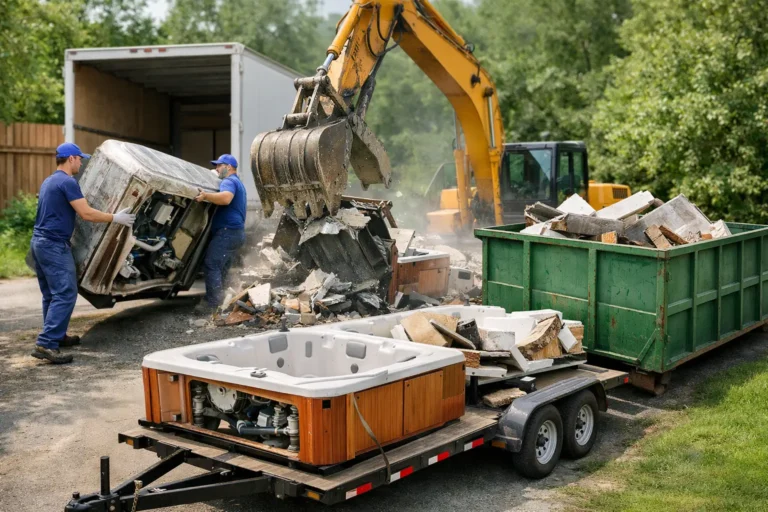

A renovation pile, garage cleanout, or yard project can get out of hand fast. A dump trailer rental gives you a place to toss debris as you work, but it also puts the loading, sorting, and disposal decisions on your shoulders. Before reserving one, it helps to know when a trailer makes sense and when full-service junk removal will save more time, effort, and stress.
What a Dump Trailer Rental Usually Includes
With a dump trailer rental, a company drops off an open trailer at your home, rental property, job site, or business. You fill it during the agreed rental window, then the provider returns to haul it away and handle disposal. The trailer uses a hydraulic lift to unload material, making it a practical option for bulky debris that would be difficult to unload by hand.
This setup can work well for customers who have the time and ability to load material themselves. It is especially common for ongoing projects where debris is generated over several days, such as a landscape overhaul, a DIY bathroom demolition, or a long-overdue shed cleanout.
The details matter, though. Trailer size, rental period, included weight, accepted materials, placement requirements, and overage fees can vary widely. A low advertised rate may not cover extra days, heavy loads, prohibited items, or disposal charges. Ask for the full pricing structure before the trailer arrives.
When a Dump Trailer Rental Is a Good Fit
A trailer is often a sensible choice when the cleanup is spread out over time and you have a clear plan for loading it. If you are replacing fence sections over a weekend, clearing brush from a large yard, or managing debris from a small remodeling project, having a trailer on site can keep the work area orderly.
It can also be useful for contractors and property owners who already have a crew. When capable workers are available to move heavy materials, a rental provides a central place to contain debris instead of creating multiple piles around the property.
A dump trailer rental is generally best for straightforward debris. Lumber, drywall, flooring, old cabinets, brush, cardboard, and general construction waste are easier to estimate and load than a mixed collection of household items. The more varied the load becomes, the more likely you are to encounter restrictions or spend time sorting items before disposal.
Driveway access is another deciding factor. The delivery vehicle needs room to maneuver, and the trailer needs a stable, accessible placement area. A sloped driveway, tight townhouse parking area, low tree limbs, soft ground, or crowded street can make drop-off more complicated. If you belong to an HOA or manage a commercial property, check whether temporary trailers require approval or have time limits.
The Work Many Renters Underestimate
The trailer itself is only one part of the job. You still need to carry, lift, load, and arrange everything inside it. That may be manageable for bagged yard waste or lightweight renovation debris, but it becomes a different job when dealing with waterlogged furniture, heavy appliances, old decking, concrete, or crowded attic contents.
Loading safely takes more than strength. Heavy material should stay low and balanced across the trailer. Loose items need to be secured so they do not shift or blow out during transport. Sharp metal, broken glass, nails, and splintered lumber create injury risks, especially when multiple people are climbing in and out to pack the load.
Time is another overlooked cost. A homeowner cleaning out a garage may imagine a few hours of work, then discover that old paint, electronics, tires, chemicals, and donation-worthy items cannot simply be tossed in with general debris. Sorting those items takes time, and some may require separate disposal arrangements.
For landlords and property managers, labor can be the biggest issue. A turnover cleanup may include abandoned furniture, mattresses, bags of trash, damaged appliances, personal belongings, and items left in a second-floor unit. A trailer parked outside does not solve the problem of getting everything down stairs, through hallways, and into the trailer.
When Full-Service Junk Removal Is the Better Choice
Full-service junk removal is built for projects where you want the work handled, not just a container delivered. A trained crew arrives, provides an on-site quote, removes approved items from wherever they are located, loads the truck, and hauls everything away. You do not need to recruit helpers, protect your back, or figure out where each item belongs.
This is often the better route for estate cleanouts, eviction cleanouts, office furniture removal, downsizing, move-out deadlines, and homes with bulky or difficult items. Couches, refrigerators, mattresses, exercise equipment, pianos, hot tubs, and old playsets are not just heavy. They require careful handling to avoid damage to walls, floors, landscaping, and nearby vehicles.
Full-service hauling also helps when speed matters. If a home is being listed, a rental needs to be turned quickly, or a renovation crew needs debris gone before the next phase starts, waiting several days to load a trailer may slow the whole project. A removal crew can clear the space in one appointment when the volume is known and access is available.
Responsible disposal is another meaningful difference. A reputable removal company can separate reusable furniture, recyclables, metal, e-waste, and landfill-bound materials as part of its process. Local Loop Junk Troop prioritizes donation and recycling when possible, which can be a better fit for customers who do not want usable items treated as ordinary trash.
Compare the Real Cost, Not Just the Rental Rate
The right choice is not always the option with the lowest first number. With a trailer, calculate the rental cost alongside delivery, pickup, disposal, included tonnage, extra weight charges, extended rental fees, and any equipment or labor you need to complete the loading.
Then put a value on your time. If two people spend a full Saturday hauling a basement’s contents up stairs and into a trailer, the financial comparison may look very different than it did at the start. This is particularly true for seniors, families handling an estate, and busy property managers who need a cleared space without adding another project to their schedule.
Full-service removal usually costs more than a bare trailer rental when the load is simple and you have free labor. But it can be the better value when the job involves heavy lifting, multiple rooms, difficult access, mixed materials, or a tight deadline. Upfront, volume-based pricing gives you a clearer picture before the work begins.
Questions to Ask Before You Book
Before choosing either option, get specific about the material and the property. Ask whether the price includes disposal and what weight limit applies. Confirm the rental length, the cost of additional days, and whether the provider accepts mattresses, appliances, electronics, paint, tires, batteries, or hazardous materials.
For a trailer, ask how much room the delivery vehicle needs and whether the placement could affect your driveway. If you have pavers, a steep grade, or a narrow drive, describe that before scheduling. It is far easier to address access concerns in advance than on delivery day.
For full-service removal, ask whether the crew can remove items from upstairs, a crawl space, a backyard, or a commercial suite. Confirm that labor, loading, hauling, and disposal are included in the quote. Clear answers help prevent surprises and keep the cleanup moving.
A Simple Way to Decide
Choose a trailer if you have several days to work, enough room for delivery, capable help for loading, and a predictable debris stream. It is a practical tool for an active DIY project where you are already doing the demolition or yard work yourself.
Choose full-service removal if you need a team to do the lifting, the materials are mixed, access is challenging, or you need the space cleared quickly. The right service should make the cleanup feel smaller, not create a new list of hauling, sorting, and disposal tasks for you to manage.
A clear driveway or empty room can change the pace of a move, renovation, sale, or fresh start. Pick the option that gives you that result with the least disruption to your property, schedule, and peace of mind.