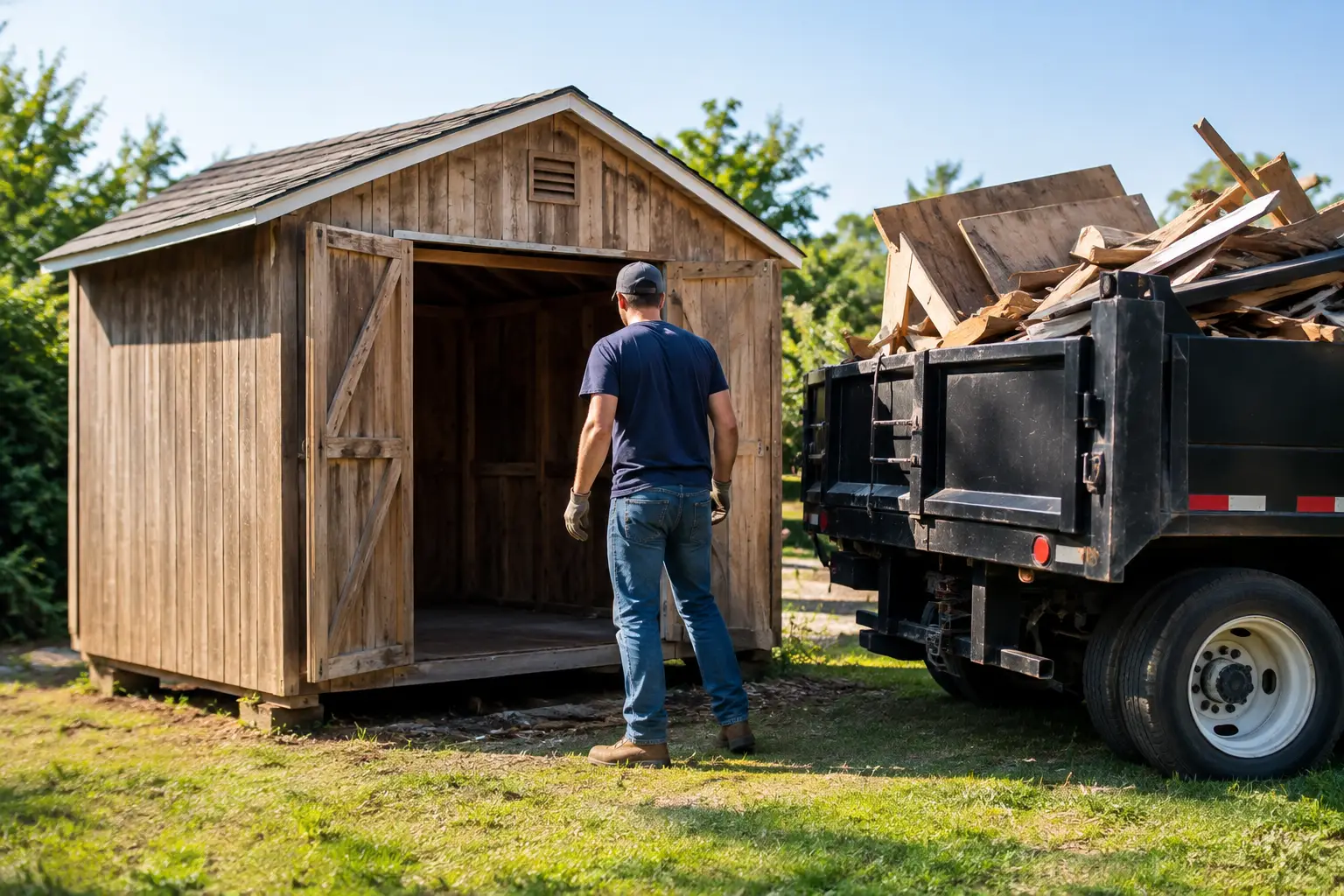
A worn-out backyard shed can become more than an eyesore. It can take up valuable space, attract pests, leak during heavy rain, or create a safety concern for children and pets. So, do junk haulers remove sheds? Many full-service junk removal companies do, but shed removal is usually more involved than a standard curbside pickup. The crew may need to empty the structure, disconnect it from the ground, demolish it safely, load the materials, and haul everything away.
For homeowners, landlords, and property managers, that distinction matters. A qualified crew can handle the labor and disposal so you do not have to rent a dumpster, borrow a truck, or spend a weekend breaking down old lumber and roofing by hand.
Do Junk Haulers Remove Sheds or Just Haul Them Away?
It depends on the shed’s condition and how it was built. A lightweight plastic resin shed or a small metal storage unit may be removable in larger sections. Most wooden sheds, however, need to be dismantled or demolished before they can be loaded onto a truck.
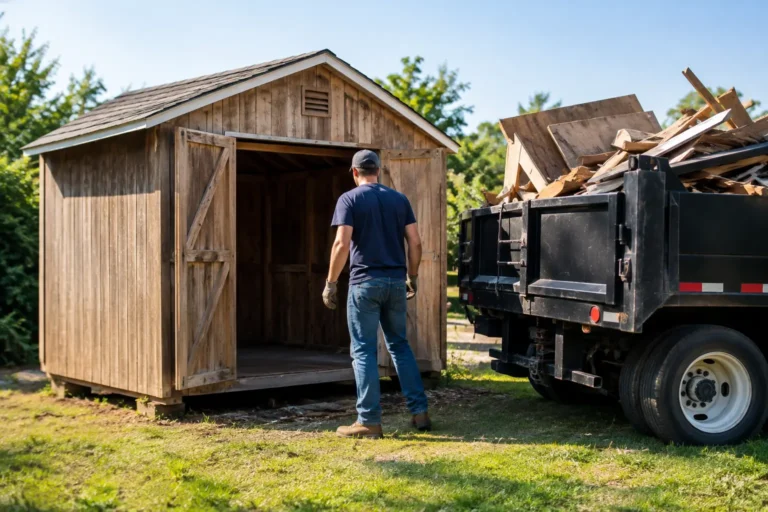
Full-service shed removal generally includes taking down the structure, loading the debris, sweeping up the work area, and transporting materials for proper disposal. If the shed is already collapsed, the job may be closer to construction debris removal. If it is still standing, the crew needs room to work safely and a plan for separating bulky materials such as lumber, shingles, metal panels, doors, windows, and flooring.
A professional team should assess the shed on-site before giving a final price. Photos can help with an initial estimate, but an in-person look reveals details that affect the work, including access, size, structural condition, and whether the shed is attached to a concrete slab or other foundation.
What a Shed Removal Service Typically Handles
The goal of a full-service removal is simple: you point out the shed, and the crew handles the heavy lifting. That said, the exact scope should be clear before work begins.
A typical service starts with removing anything left inside. Old tools, paint cans, lawn equipment, shelving, boxes, and bagged debris all need to be evaluated. Most ordinary household and yard items can be hauled away with the shed materials. Hazardous materials, however, may require separate handling or cannot be accepted in a standard junk load.
Next comes dismantling. Crews commonly remove doors and windows first, then roofing, wall panels, framing, and flooring. Breaking the shed down in a controlled order helps prevent unexpected collapse and keeps debris contained. The materials are then loaded into the truck, followed by a basic cleanup of loose debris.
At Local Loop Junk Troop, shed removal can also make sense when paired with other projects, such as yard waste pickup, deck demolition, garage cleanouts, or construction debris hauling. Combining work into one visit can be more convenient than scheduling separate crews for each task.
Factors That Affect Shed Removal Pricing
There is no single flat price that fits every shed. An 8-by-10 wooden shed with a shingle roof is a different job from a small plastic storage box, and a large workshop with electricity is different again. Upfront, on-site pricing protects you from guessing and lets the crew account for the actual labor and disposal needs.
The biggest factors are usually shed size, material, condition, access, and attachments. Larger sheds create more debris and require more labor. Wood framing, thick plywood flooring, heavy roofing, and corrugated metal all affect loading and disposal. A shed that is already unstable may require extra care, while a shed in good condition may take longer to dismantle properly because its materials are still securely fastened.
Access can make a major difference. A shed near the street with a clear path to the truck is generally easier to remove than one behind a fenced yard, down a steep slope, or surrounded by landscaping. Tight gates, low tree limbs, soft ground, and long carrying distances can all add time to the job.
The foundation is another key detail. In many cases, junk haulers can remove the shed itself but leave a concrete slab in place. Concrete removal requires heavier equipment, different disposal arrangements, and sometimes a separate demolition quote. If the shed sits on pavers, skids, or a small wood platform, those materials may be removable as part of the same project.
Before Your Shed Removal Appointment
A little preparation helps the job move faster, but you should not need to do the hard work yourself. Start by deciding what stays and what goes. Check the shed carefully for personal belongings, paperwork, sentimental items, and equipment you plan to keep. It is easy to forget items stored on high shelves, under workbenches, or behind stacked boxes.
If you can safely do so, remove small loose items before the crew arrives. This helps distinguish shed contents from the shed structure and can make sorting easier. Do not try to pull down walls, remove roof sections, or disconnect wiring unless you have the right experience and tools. An old shed can be less stable than it looks.
Make sure the crew can reach the work area. Unlock gates, move vehicles from the driveway, and keep pets indoors. If there are sprinkler heads, buried utility lines, delicate garden beds, or other property features near the shed, point them out during the walkthrough. Clear communication helps protect the property and prevents surprises.
When a Shed May Need Special Handling
Some sheds are not straightforward demolition jobs. If yours has electrical service, lighting, outlets, or a hardwired extension from the home, the power should be professionally disconnected before removal. The same applies to plumbing lines in a potting shed, workshop, or backyard bar area.
Older sheds can also raise material concerns. Roofing, siding, insulation, flooring, or paint may need special evaluation if you suspect asbestos, lead-based paint, or other regulated materials. A reputable company will tell you when a specialized contractor or testing process is needed rather than treating a potential hazard like ordinary debris.
Sheds located close to fences, pools, HVAC equipment, mature trees, or neighboring structures may require a slower, more precise teardown. This is where choosing a company experienced in light demolition matters. The fastest approach is not always the safest one, especially when there is limited room for materials to fall or be carried out.
Donation, Recycling, and Disposal After Removal
Not every part of an old shed belongs in the landfill. Clean metal panels, some hardware, and certain reusable materials may be recyclable. If a newer shed can be disassembled without damage, portions may even have a second life, depending on condition and local demand.
Still, realistic expectations help. Water damage, rot, mold, nails, broken glass, and deteriorated roofing often limit what can be donated or reused. Responsible disposal means sorting what is practical to recycle or donate while ensuring unusable debris is handled through appropriate facilities.
This is one reason full-service hauling is valuable. You are not left trying to figure out which materials go to a transfer station, which can be recycled, and which require a separate drop-off. The crew handles the loading and disposal logistics after the job is complete.
Is Shed Removal Better Than DIY Demolition?
DIY can be reasonable for a very small, lightweight shed with easy access, no utilities, and no structural damage. But once a project involves roofing, heavy framing, nails, unstable walls, or multiple truckloads of debris, the savings can disappear quickly. You may need tools, safety gear, a rental truck or dumpster, disposal fees, and help lifting awkward materials.
Professional removal is often the better fit when you need the space cleared quickly, are preparing a property for sale or rental, or simply do not want to take on the risk and cleanup. It also gives you one point of contact for teardown, hauling, and responsible disposal.
A shed should not hold up your next project, whether that means creating room for a patio, opening up the yard, addressing a property maintenance issue, or getting a home ready for the market. With a clear on-site quote and a capable removal crew, an aging shed can go from backyard burden to usable space without turning into a weekend-long demolition project.