That old refrigerator in the garage may look like one item, but it can turn into a damaged doorway, strained back, or disposal headache in a hurry. Knowing how to remove bulky appliances starts with recognizing when a job is manageable and when the safest move is to let an experienced hauling crew take over.
Appliances are awkward, heavy, and often connected to water, gas, power, or refrigerant systems. A washer can weigh more than 150 pounds. A refrigerator can be even heavier, with a size and balance that make it difficult to control on stairs or tight turns. The goal is not simply to get the appliance outside. It is to disconnect it safely, protect your property, and make sure it reaches the right disposal channel.
Start With the Appliance and Its Connections
Before moving anything, identify the appliance, its condition, and what it is still connected to. Refrigerators, freezers, ranges, washers, dryers, dishwashers, water heaters, and air conditioners all require different preparation.
Unplug electric appliances before doing anything else. For a washer or dishwasher, turn off the water supply and disconnect the hoses carefully. Keep towels and a shallow pan nearby because residual water can spill from lines, pumps, and drain hoses. Let a dryer cool completely before handling it, especially if it was recently in use.
Gas appliances need extra caution. Do not attempt to disconnect a gas range, gas dryer, or water heater unless you know how to shut off the supply correctly and can verify the connection is safe. A licensed plumber or qualified technician is the right choice for a gas disconnection. Saving a few minutes is not worth risking a leak.
Refrigerators, freezers, dehumidifiers, and air conditioners may contain refrigerants that require proper recovery before disposal. These units should not be taken apart or abandoned at the curb. Depending on the appliance and local rules, a recycling facility or professional removal team may need to handle it through an approved process.
Measure the Route Before You Lift
Most appliance-removal problems happen before the appliance reaches the truck. A unit that fits through an open kitchen may not fit through the exterior door, around a stair landing, or into an elevator.
Measure the appliance’s height, width, and depth. Then measure the narrowest points on the route: door frames, hallways, turns, stairwells, gates, and the truck loading area. Remove loose rugs, pet bowls, small furniture, and anything else that could create a trip hazard. Open doors fully or remove them temporarily if a few extra inches will make the move safer.
Protect the home, too. Cardboard, furniture pads, and moving blankets can help prevent scuffs on walls and scratches on hardwood floors. If you are moving a refrigerator across finished flooring, place a protective surface under it rather than dragging the feet directly across the floor.
A simple route plan also prevents a common mistake: getting an appliance halfway outside and realizing there is nowhere level to set it down. Decide where the appliance will rest at every stage of the move, particularly if you have stairs, a long walkway, or uneven ground.
Use the Right Moving Equipment
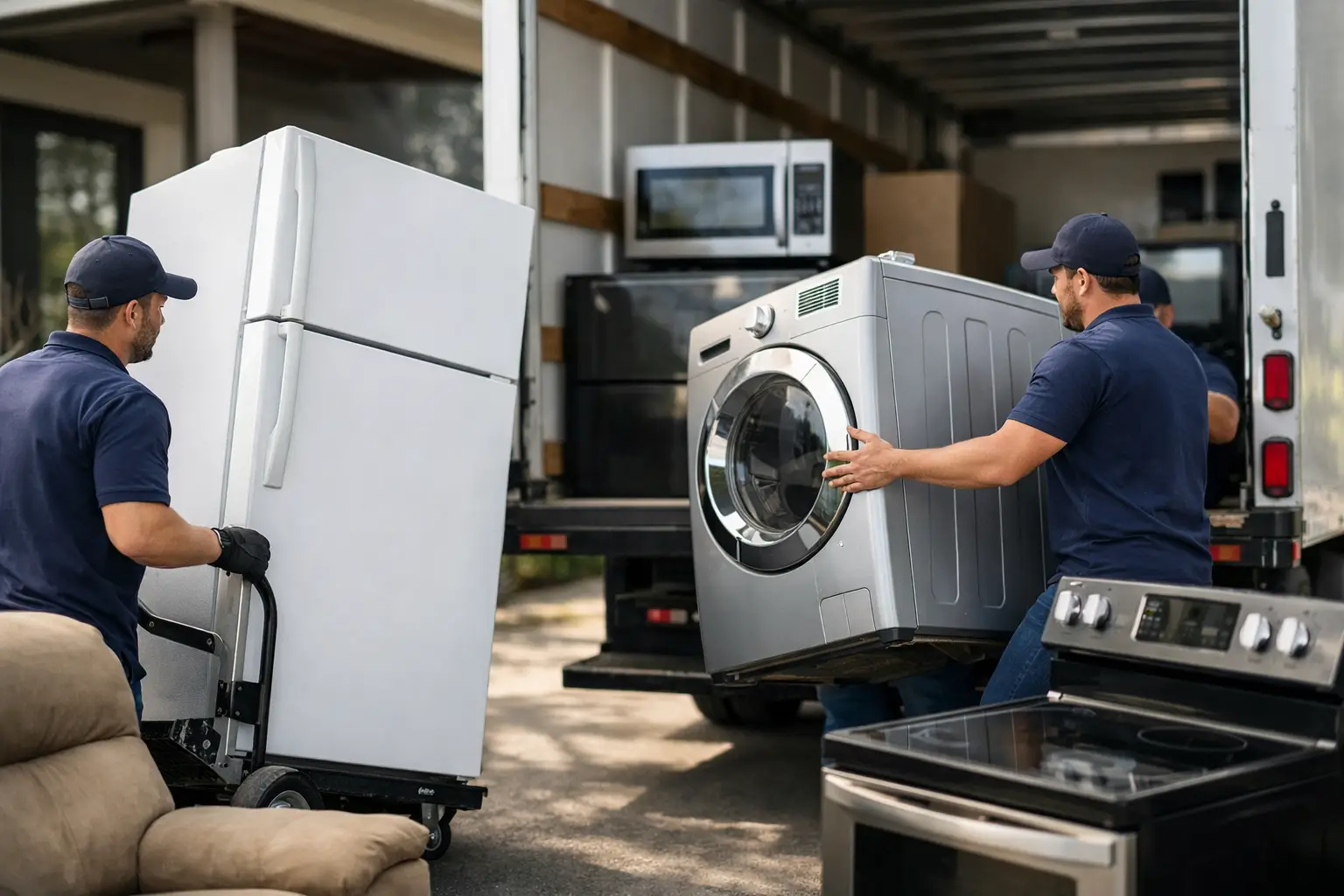
For a heavy appliance, a hand truck or appliance dolly is far safer than trying to carry the load. An appliance dolly has a larger frame and straps designed to secure tall, heavy items such as refrigerators and upright freezers.
Keep the appliance upright whenever possible. Refrigerators and freezers contain compressor oils that can move into the cooling lines if the unit is laid on its side. If it must be tilted or transported horizontally, check the manufacturer’s guidance and allow adequate time upright before plugging it in again. Since this is a removal job, the next owner or recycling facility may handle that step, but it is still a good reason to avoid unnecessary tipping.
Do not move a major appliance alone. Even with a dolly, one person needs to control the load while another guides the route, watches clearance, and helps on thresholds or stairs. Communicate before every change in direction. Slow, controlled movement is safer than trying to muscle an appliance through a tight spot.
For stairs, the risks increase significantly. Appliances can shift suddenly, pull a helper off balance, or damage steps and railings. A professional team with the right equipment is usually the practical choice for a refrigerator, washer, dryer, or range that needs to come down a staircase.
How to Remove Bulky Appliances Without Damaging Your Home
Once the appliance is disconnected, empty it completely. Remove shelves, drawers, racks, and detachable hoses where possible. Tape doors, cords, and loose components in place so they do not swing open during the move. For refrigerators and freezers, defrost and dry the unit ahead of time. This reduces leaking water, odors, and unnecessary weight.
Use straps to secure the appliance to the dolly. The straps should be tight enough to prevent shifting, but do not overtighten in a way that damages exterior panels. Tilt the dolly back slowly and keep the load close to the wheels. Avoid sharp turns and do not pull an appliance toward yourself while walking backward down stairs.
If the appliance has been sitting in a basement, garage, or storage area for years, inspect the surrounding space first. Old water lines, rusted connections, mold, pests, or loose flooring can change the scope of the job. In those cases, clearing the area and arranging removal may be safer than forcing a rushed DIY move.
Choose the Right Disposal Option
Getting the appliance out of the house is only half the job. Major appliances are not regular household trash, and many waste services will not take them without advance scheduling or specific preparation.
If the appliance still works, donation may be an option. Clean it thoroughly, confirm that it operates, and check whether a local organization accepts that type of appliance. Older appliances may work but still be inefficient, so donation acceptance can depend on age, condition, and current demand.
Recycling is often the better route for appliances that no longer work. Metal components can be recovered, while refrigerants and certain electronic parts need special handling. Some retailers offer haul-away when delivering a replacement appliance. That can be convenient, but it depends on the retailer’s policy and whether the old unit is already disconnected and accessible.
Curbside bulky-item pickup may work for some locations, but it often comes with restrictions, scheduling windows, and requirements for refrigerant-containing appliances. It also leaves a large item exposed outside, where it can block access, attract scavengers, or sit through bad weather.
Full-service junk removal is often the simplest choice when the appliance is heavy, on an upper floor, still in a tight space, or part of a larger cleanup. The crew can assess the access, provide an upfront on-site quote, handle all labor, load the appliance, and route usable materials toward donation or recycling when possible.
When It Makes Sense to Call for Help
There is no prize for moving a 250-pound refrigerator through a narrow hallway by yourself. Calling for help makes sense when you have stairs, a gas or water connection, a large appliance, limited lifting ability, a deadline, or several items to clear at once.
It is also a good option during a move, estate cleanout, rental turnover, renovation, or appliance replacement. Instead of coordinating a utility disconnect, truck rental, helper, disposal site, and heavy lifting, you can have one team manage the removal process from pickup to responsible disposal.
For homeowners, landlords, and businesses in the Charlotte area, Local Loop Junk Troop provides full-service appliance hauling with the labor and loading included. A clear path and an honest description of the appliance are usually all it takes to get the process started.
Before your old appliance becomes one more item taking up room in the garage or blocking a renovation, take a moment to assess its connections, its route out, and its final destination. The safest removal plan is the one that protects your home, your time, and the people doing the lifting.