
A broken recliner in the garage is manageable until it is joined by old paint cans, moving boxes, a dead refrigerator, and the debris from a weekend project. That is when junk removal stops being a simple pickup problem and becomes a time, labor, and disposal problem. Full-service hauling gives homeowners, landlords, and businesses one team to assess the items, do the heavy lifting, load the truck, and handle the next steps.
For people across Charlotte and nearby communities, the biggest benefit is not just getting rid of stuff. It is getting usable space back without spending a Saturday finding a truck, recruiting help, sorting disposal rules, and making multiple trips to a landfill or donation center.
What Full-Service Junk Removal Actually Includes
Full-service means the crew handles the physical work from start to finish. You point out what needs to go, receive an on-site price before work begins, and approve the removal. The team then carries items out from the garage, attic, backyard, office, storage unit, or wherever they are located.
This matters because many unwanted items are not curbside-pickup material. A sectional sofa may need to be carried down a narrow staircase. An old washer may be too heavy for one person to move safely. Construction debris can include sharp materials, awkward lumber, and bags of drywall that quickly overwhelm a personal vehicle.
A professional hauling crew can typically remove furniture, mattresses, appliances, electronics, boxes, clothing, yard waste, renovation debris, and general household clutter. They can also help with specialty items that require more planning, such as pianos, hot tubs, sheds, playsets, and RVs. The exact approach depends on the item, its condition, access to the property, and local disposal requirements.
The goal is a clean, orderly process that respects your property. That means using care around walls, floors, doors, landscaping, and common areas, especially in apartments, offices, and managed properties.
When Junk Removal Is Worth Calling For
There is no need to wait for a full-house cleanout. Hauling service is often the practical choice when one large item is standing in the way of a move, a renovation, or a property turnover. A single appliance, bulky couch, or pile of storm debris may be enough to justify getting help.
It is especially useful when a deadline is involved. Landlords may need to clear a unit between tenants. Realtors may need a home photo-ready before listing day. Families handling an estate or assisted living transition often have a limited window to sort belongings and prepare a property. Businesses may need an office, retail space, or warehouse cleared without interrupting normal operations.
The trade-off is straightforward. Doing it yourself can cost less in direct hauling fees if you already have a truck, enough labor, and time to make multiple disposal trips. Hiring a crew costs more upfront, but it removes the lifting, scheduling, transportation, and disposal logistics. For time-sensitive cleanouts or heavy loads, that convenience can be the better value.
How Junk Removal Pricing Usually Works
Reputable providers should give you a clear price before loading begins. Most full-service hauling is priced by the amount of space items take up in the truck, combined with factors such as labor, weight, accessibility, and disposal fees.
A few examples show why estimates vary. A small load of boxes and a chair takes less truck space and labor than a garage packed with furniture and tools. A ground-floor pickup is generally simpler than removing a heavy sleeper sofa from a third-floor apartment. Materials such as concrete, dirt, roofing, tires, or certain electronics can carry additional disposal costs because they require specialized handling.
The best way to avoid surprises is to show the crew everything you want removed before the quote is finalized. If you are still deciding on a few items, point those out too. A good provider will explain what is included, identify any special items, and let you approve the total before the work starts.
Be cautious with unusually low estimates that are vague about labor, fuel, or landfill charges. Upfront pricing is more useful than a cheap-sounding number that changes once the truck is loaded.
Preparing for a Faster, Easier Pickup
You do not need to drag everything to the curb or break down furniture before a full-service appointment. That is the point of hiring help. Still, a little preparation can make the visit smoother and help ensure nothing important is removed by mistake.
Walk through the space before the crew arrives and separate items you are keeping from items that should go. Check drawers, cabinets, desks, storage bins, and pockets for documents, photos, medication, jewelry, or cash. If an item is being donated rather than discarded, let the crew know its condition and keep it apart from damaged materials when possible.
For a larger cleanout, make sure there is a clear path to the items and reasonable access for the truck. Move vehicles if they block the driveway, secure pets, and share any access details for gated communities, elevators, loading docks, or storage facilities. These small details prevent delays and allow the crew to focus on the work.
Responsible Disposal Is More Than a Truck Run
Not every item belongs in a landfill. Furniture in good condition may be suitable for donation. Metal appliances can often be recycled. Cardboard, certain electronics, scrap metal, and usable household goods may have a better next stop than the dump.
That does not mean every item can be donated or recycled. Mold, damage, missing parts, safety issues, and local facility rules all affect what can be accepted. A realistic disposal plan balances responsible sorting with the need to clear the property efficiently.
For customers, the benefit is simple: you do not have to research every disposal rule on your own. A responsible junk hauling company sorts practical donation and recycling opportunities first, then disposes of what cannot be recovered through appropriate channels. This is especially valuable after renovations, estate cleanouts, and office moves, when the volume of materials can make DIY sorting difficult.
Cleanouts and Light Demolition Often Go Together
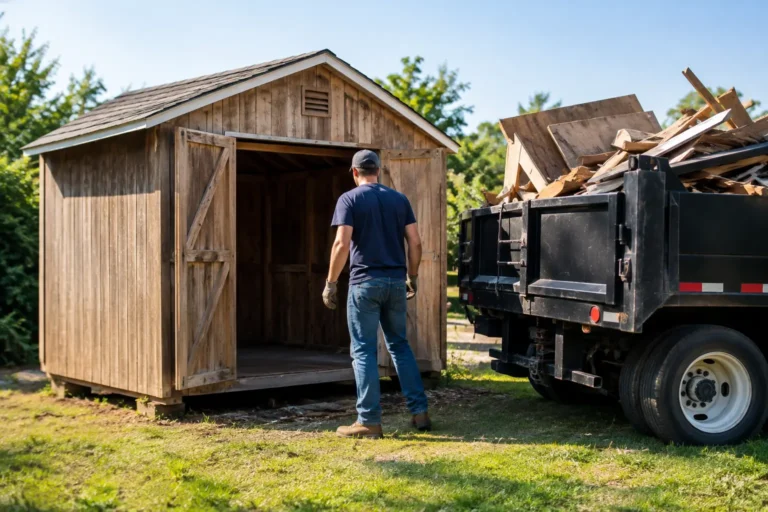
Sometimes the problem is more than loose clutter. An old deck, damaged shed, worn-out cabinets, bathroom fixtures, or an unwanted playset may need to be taken apart before it can be hauled away. In those cases, light demolition and hauling work best as one coordinated service.
Combining the jobs eliminates a common gap: a contractor removes part of a structure, but someone still has to load and dispose of the debris. A crew that can deconstruct and haul can clear the area in a single project, leaving the space ready for the next phase.
The scope matters here. Removing a freestanding shed or tearing out old kitchen cabinets is different from structural demolition. Ask what the crew can safely handle, whether permits or HOA approvals may apply, and how debris will be contained and removed. Clear expectations protect the property and keep the project moving.
Choosing a Junk Removal Company You Can Trust
The right company should make the process feel simpler, not more complicated. Look for responsive scheduling, clear on-site quotes, labor-inclusive service, and a crew that treats your home or business with respect. Reviews can also offer useful details about punctuality, communication, and how well a provider handles challenging jobs.
Same-day availability can be a major advantage when a move, closing, eviction, or contractor deadline cannot wait. It depends on truck capacity and scheduling, so calling early is still the best move when you know a project is coming.
Local Loop Junk Troop helps customers clear unwanted items without turning the job into another project on their list. Whether you need one bulky appliance removed or an entire property cleaned out, the easiest next step is to identify what needs to go, get a clear quote, and let an experienced crew create the breathing room you need.