
That old conference table usually becomes a problem five minutes before the new one arrives. Add cubicles, filing cabinets, broken desks, and a tight move-out deadline, and suddenly you need a real plan for how to remove office furniture without disrupting your staff, damaging the property, or wasting a full day figuring out disposal.
Office furniture removal sounds simple until you get into the details. Some items are bulky but light. Others look manageable until you try to move them through a narrow hallway or elevator. In a working office, the challenge is not just getting furniture out. It is keeping the process organized, safe, and fast enough that your business can keep moving.
How to remove office furniture without slowing down your business
The best approach starts with separating what is leaving from what is staying. Before anyone lifts a chair or unscrews a desk, walk the office and mark every item for removal. This avoids the common problem of moving the wrong pieces, blocking active work areas, or mixing junk with furniture that is being relocated.
If you manage a larger space, break the job into zones. Start with private offices, then shared workstations, then storage rooms, then break areas. A zone-by-zone approach helps your team stay clear on progress and prevents piles of furniture from ending up in the middle of the office.
Timing matters more than most people expect. If your office is still operating, schedule removal before opening, after hours, or during a slower business window. For medical offices, property-managed suites, and customer-facing businesses, this can make the difference between a clean job and a disruptive one.
Start with an inventory and removal plan
A quick inventory saves time on removal day. Count desks, chairs, cubicle panels, shelves, conference tables, reception furniture, and filing cabinets. Note anything oversized, damaged, or attached to walls. Also flag items that may need partial disassembly to fit through doors or elevators.
This is also the point to decide what happens to each piece. Some office furniture can be donated. Some can be recycled. Some is too damaged or outdated to be reused and needs proper disposal. If you skip this step, the removal crew ends up making decisions on the fly, which usually slows everything down.
Take a few minutes to check building access rules too. Many office parks and multi-tenant buildings require loading dock reservations, elevator protection, or after-hours service. Property managers often appreciate advance notice, and that simple call can prevent delays once the job starts.
Protect data and business equipment before removal
Not everything in an office is just furniture. Desks, credenzas, and filing cabinets often hold sensitive documents, electronics, keys, and personal items. Before removal begins, empty every drawer, shelf, and cabinet completely.
This is especially important with lateral files and metal cabinets. They are heavier than they look, and moving them full creates both a safety risk and a data risk. The last thing any business wants is damaged property mixed with misplaced records.
If the office is closing or downsizing, assign one person to do a final sweep of each area before items are hauled out. That extra set of eyes helps catch chargers, paperwork, access cards, and equipment that might otherwise end up in the truck.
The safest way to remove office furniture
Safety is where DIY office cleanouts often go sideways. Desks with metal frames, modular cubicles, and large meeting tables can be awkward to carry even when they are not especially heavy. The shape of the item often creates the biggest hazard, not just the weight.
Use proper lifting techniques and enough labor for the size of the piece. If an item needs to be tilted, rotated, or carried down stairs, do not try to force it with one person. Wall damage, floor scratches, and back injuries happen fast during rushed removals.
Know what should be disassembled first
Some furniture should be moved intact. Other pieces are faster and safer to take apart first. Cubicle systems, long conference tables, L-shaped desks, and shelving units usually move better in sections. Taking a few minutes to remove legs, panels, or connected parts can save a lot of frustration in hallways and doorways.
Keep hardware together in labeled bags if any furniture is being relocated or sold. If the pieces are headed for disposal, detailed organization is less important, but disassembly still helps with handling and truck loading.
There is a trade-off here. Disassembly takes extra labor up front, but it often reduces total job time because the furniture becomes easier to carry, stack, and haul. In tight office suites, that trade-off is usually worth it.
Protect floors, walls, and common areas
Office furniture removal is not just about the items leaving the space. It is also about what gets left behind. Dragging desks across tile, bumping elevators, and scraping door frames can create repair costs that are far more annoying than the removal itself.
Clear walking paths before the job starts. Prop doors if allowed. Use the right route to the loading area instead of the shortest route through active work zones. In shared buildings, keeping hallways and entry points clean matters just as much as getting the furniture out.
A professional crew usually works with a clean, orderly removal process for exactly this reason. Fast service only helps if the property still looks good when the truck pulls away.
Hauling, donation, and disposal options
Once the furniture is out of the office, the next question is where it goes. This is where many businesses lose time. Municipal bulk pickup is often limited, landlords may not allow curbside dumping, and not every disposal site accepts commercial furniture.
Good office chairs, desks, and tables may be reusable if they are still in solid condition. Metal components, some wood materials, and certain fixtures may be recyclable depending on the item and local handling rules. Broken laminate furniture, damaged particleboard, or heavily worn pieces often have fewer options.
The right answer depends on condition, quantity, and timeline. If you only have a few pieces and plenty of time, you may be able to separate items carefully. If you are clearing an entire office on a deadline, full-service hauling is usually the more practical choice.
When hiring help makes more sense than DIY
If you are removing one small desk from a ground-floor office, a do-it-yourself approach may be fine. If you are dealing with multiple workstations, cubicles, conference furniture, or a lease turnover date, it usually makes sense to bring in a removal team.
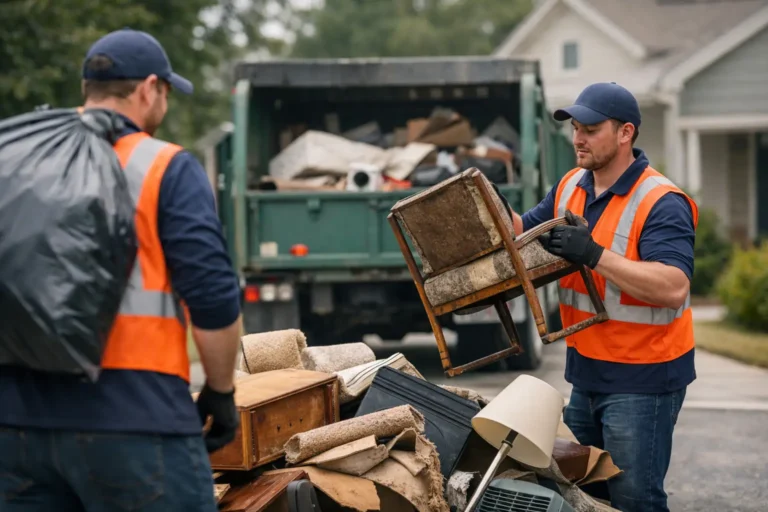
A full-service crew handles the labor, loading, hauling, and disposal logistics in one visit. That means no renting trucks, no asking staff to lift heavy furniture, and no guessing where different materials can be dropped off. For businesses, the biggest benefit is often speed. You get the space cleared without turning your employees into movers.
This is also where upfront pricing matters. Commercial customers usually want to know the cost before the work starts, not after a truck is loaded. On-site quotes and clear scope make the process much easier to approve and schedule.
In Charlotte and surrounding areas, companies like Local Loop Junk Troop are often called in for exactly this kind of job because they can provide labor-inclusive office furniture removal, quick scheduling, and responsible disposal without adding more work to the customer’s plate.
Common mistakes to avoid when removing office furniture
The first mistake is underestimating the job. Office furniture removal tends to look easy when everything is still neatly arranged. Once disassembly starts and pathways fill up, the project gets more complicated.
The second mistake is waiting too long to schedule. If your building has move-out deadlines, elevator reservations, or contractor coordination, last-minute planning can create unnecessary pressure. Give yourself enough time to line up labor and access.
The third mistake is ignoring disposal rules. Leaving furniture by a dumpster or behind a commercial building can lead to complaints, fees, or lease issues. Always confirm where the items are going before removal day.
The fourth mistake is forgetting the cleanup. Once furniture is gone, there may still be loose hardware, dust, cable covers, or debris left behind. A proper finish leaves the office broom-clean and ready for the next use, whether that means new furniture, a renovation, or a property handoff.
A simple process works best
If you want the cleanest answer to how to remove office furniture, keep it simple. Identify what is going, empty it, disassemble what makes sense, protect the space, and use a hauling plan that matches your timeline. The more organized the process is at the start, the faster the office gets back to normal.
For most businesses, the real goal is not just getting rid of old desks and chairs. It is clearing space without lost time, extra stress, or damage to the property. When the job is handled the right way, office furniture removal feels less like a disruption and more like progress.