That old deck usually stops being a small project the moment you look under it. Rotten joists, loose railings, buried footings, rusted fasteners, and years of patched repairs can turn a simple tear-out into a messy, heavy job fast. That is why many homeowners and property managers start by calling deck demolition contractors instead of trying to force a weekend DIY project into a much bigger safety and disposal problem.
If the goal is to clear the space quickly, protect the surrounding property, and avoid piles of treated lumber sitting in the driveway, hiring the right crew makes a real difference. A deck teardown is not only about breaking boards apart. It is also about controlling debris, hauling material out efficiently, and leaving the site ready for whatever comes next.
What deck demolition contractors actually handle
A lot of people hear the word demolition and picture a brute-force approach. In reality, deck removal usually works best when it is controlled, methodical, and planned around the property. Contractors assess the size of the structure, how it is attached to the house, whether stairs or skirting are involved, and what kind of material they are dealing with before the first board comes off.
That matters because no two decks come apart the same way. A small ground-level platform in the backyard is very different from a raised deck with multiple landings, railing sections, lattice, and deep-set posts. Some structures are freestanding. Others are tied directly into the home. The safest removal plan depends on those details.
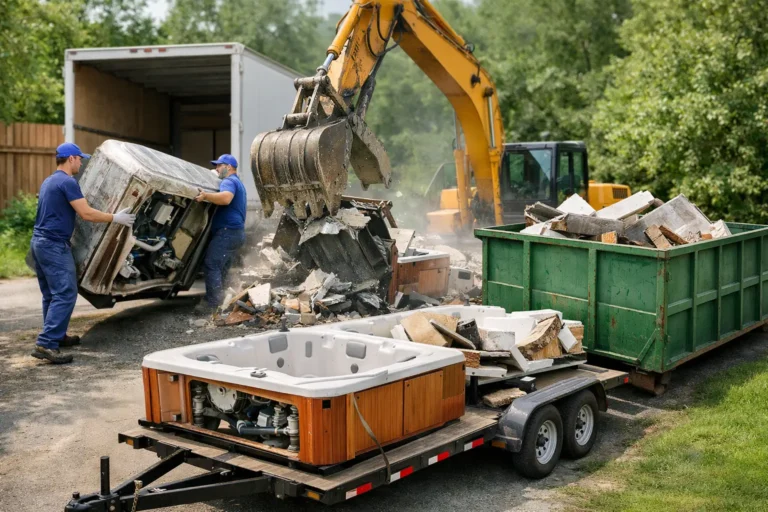
Most deck demolition contractors also handle the part homeowners usually underestimate – cleanup and disposal. Old deck boards are bulky, splintered, dirty, and often too heavy for normal curbside pickup. If the lumber is pressure-treated, disposal may require special handling depending on local rules and the condition of the material. A full-service crew tears it down, loads it, hauls it away, and clears the work area so you are not left staring at a debris field for the next two weeks.
When a deck should come down instead of getting repaired
Sometimes a deck can be repaired. Sometimes repair money just delays the real problem. The tricky part is knowing which situation you are in.
If the damage is isolated to a few surface boards, a few railing sections, or some cosmetic wear, repairs may be the practical choice. But if the framing is compromised, the ledger connection is failing, the posts are shifting, or water damage is widespread, a full demolition often makes more financial sense than stacking repair after repair.
Age plays a role too. Many older decks have been exposed to years of moisture, movement, and sun damage. Even if one section looks decent, the hidden parts underneath may tell a different story. Soft wood, insect damage, corroded connectors, and wobbly stairs are all signs that repair may not be the best long-term answer.
For landlords, HOA managers, and real estate professionals, there is another factor: liability. If the deck is unsafe, delaying removal can create more risk than the demolition cost itself. In those cases, speed and documentation matter, and working with an experienced service team helps move the project forward without added confusion.
Why DIY deck removal gets harder than expected
On paper, tearing out a deck sounds straightforward. Pull up boards, break down framing, toss the debris, and move on. In practice, it is loud, labor-heavy, and more technical than many property owners expect.
The first issue is weight. Wet lumber, concrete footings, railing systems, and hardware add up fast. The second is access. If the deck is in a tight backyard, close to fencing, landscaping, or the home itself, hauling debris out takes planning. Then there is the issue of tools, safety gear, trailer capacity, and disposal time.
The attachment point to the house is another reason DIY jobs get risky. A poorly handled removal can damage siding, flashing, trim, or structural components near the connection area. Even after the deck is gone, there may be leftover anchors, exposed surfaces, or footings below grade that still need attention.
That does not mean every property owner should never do it themselves. A very small, detached platform might be manageable for someone with experience, proper equipment, and a clear disposal plan. But for most raised, aging, or larger structures, hiring professionals is usually the faster and cleaner route.
What to expect from a professional deck demolition process
A reliable demolition service should make the process feel simple, not vague. It usually starts with an on-site assessment. The crew looks at the deck size, materials, height, accessibility, and any conditions that affect labor or hauling. From there, you should get clear pricing and a straightforward scope of work.
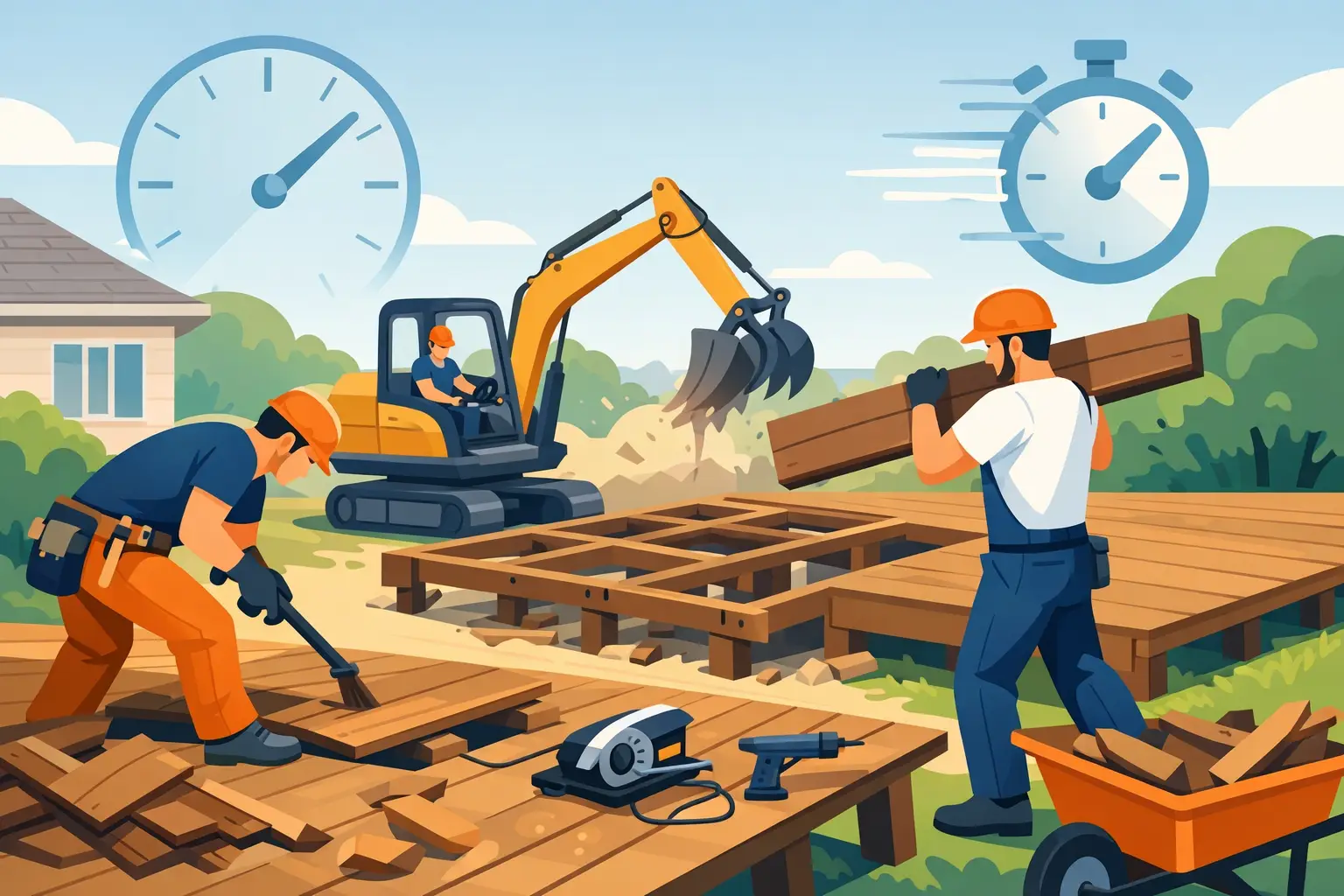
Once scheduled, the crew typically removes railings, stairs, deck boards, framing, and support posts in a sequence that keeps the structure stable while it is being dismantled. Debris is gathered as the work moves along rather than allowed to spread all over the yard. That approach protects the property and speeds up final cleanup.
Footings are one of the biggest variables. Some customers want only the above-ground structure removed. Others want full removal, including concrete piers or buried posts, to prepare the area for a rebuild, patio, sod installation, or another use. That is worth discussing up front because it affects labor, equipment needs, and disposal volume.
A strong contractor will also be honest about trade-offs. Full extraction creates a cleaner slate, but it can cost more and disturb more of the yard. Partial removal may reduce cost, but it may not be enough if new construction is planned right away. The best choice depends on what is happening next on the property.
Choosing deck demolition contractors for your property
Not every company approaches this kind of work the same way. Some are set up for full-service light demolition and hauling. Others may only handle construction work tied to a rebuild. If you just need the deck gone, it helps to ask practical questions.
Ask whether cleanup and disposal are included. Ask whether they can remove stairs, skirting, pergola features, and footings if needed. Ask how pricing is structured and whether labor, loading, hauling, and disposal are part of one quote. Customers usually want fewer surprises, not more line items showing up later.
Responsiveness matters too. If you are dealing with a safety issue, a home sale, a tenant turnover, or a renovation schedule, waiting around for days to get answers is frustrating. A company that offers fast scheduling, on-site quotes, and a clear process is usually easier to work with from the start.
For many Charlotte-area customers, that is why a local service provider with both demolition and hauling experience is a better fit than a company focused only on one part of the job. Local Loop Junk Troop, for example, handles light demolition and debris removal together, which helps customers avoid coordinating multiple vendors for one project.
Pricing factors that affect deck demolition
There is no flat price that fits every deck because the work depends on size, height, materials, and access. A simple ground-level wood deck is usually less involved than a second-story composite deck with stairs, lattice, and deep concrete supports.
The main factors are total square footage, how the deck is built, what it is attached to, and how easy it is to reach with labor and hauling equipment. Disposal volume matters as well. Heavier material, more framing, and larger support systems increase both labor time and load size.
Customers sometimes ask whether it is cheaper to partially dismantle the deck before the crew arrives. Sometimes yes, but not always enough to make it worth the extra effort or risk. If you remove boards but leave the hardest structural parts and all the debris handling, the savings may be limited. It is usually better to ask for a quote first and compare the time, effort, and liability involved.
Preparing for the work without overcomplicating it
You usually do not need to do much before demolition day. Clearing furniture, planters, grills, and personal items from the deck or nearby area helps. If there is a gate code, limited parking, or a narrow access point, sharing that in advance makes the job go smoother.
It also helps to decide what you want removed and what stays. Some customers want the entire structure gone. Others want an attached bench, nearby shed debris, or leftover yard material hauled away at the same time. Mentioning that early can save a second appointment.
If your end goal is a rebuild, patio installation, sale prep, or general yard cleanup, say that too. The removal plan may change depending on what the area needs to look like when the crew leaves.
A worn-out deck does not get safer by waiting, and it rarely gets easier to remove once rot, movement, and weather keep working on it. The right crew can take a job that feels heavy, messy, and time-consuming and turn it into a straightforward service call, leaving you with clear space and one less problem hanging off the back of the house.