A garage that is leaning, water-damaged, unsafe, or simply standing in the way of a new project can become expensive before any demolition even starts. The real garage demolition cost is not just about knocking down a structure. It includes labor, equipment, hauling, disposal, site conditions, and the work needed to leave the area clean and ready for what comes next.
For Charlotte-area homeowners, landlords, and property managers, a clear on-site quote is usually the best way to avoid surprises. Every garage has different materials, access challenges, utility connections, and debris volumes. A small detached wood garage is a very different job from a block structure with a concrete slab, electrical wiring, and years of stored belongings inside.
Typical Garage Demolition Cost Ranges
Most garage demolition projects fall somewhere between $2,000 and $10,000 or more, depending on the structure and scope of work. A basic one-car detached garage made of wood framing may be toward the lower end when access is easy and there are no hazardous materials. A larger two-car garage, masonry building, attached garage, or structure with a thick concrete foundation can cost substantially more.
Those broad ranges are useful for early budgeting, but they are not a substitute for an on-site assessment. A reliable quote should account for the entire job, from protecting the work area and tearing down the structure to loading debris, hauling it away, and disposing of materials properly.
The lowest quote is not always the best value if it leaves out dump fees, slab removal, permit coordination, or final cleanup. Ask what is included so you can compare services fairly.
What Drives Garage Demolition Cost?
Garage size and construction type
Size matters because more square footage usually means more labor and more material to haul. However, construction type often has an even bigger effect. A wood-framed garage with siding and a shingle roof generally comes apart faster than one built with concrete block, brick, steel framing, or heavy roof materials.
A detached garage is often more straightforward than an attached garage because there is less risk of affecting the main home. Attached structures may require more careful separation, temporary weather protection, and extra attention to shared walls, roofing, or utility connections.
The concrete slab and foundation
Many people assume demolition means the whole garage, including the slab. That is not always the case. Leaving a sound slab in place can reduce the price, particularly if it will be used for a shed, patio, parking pad, or future structure.
Breaking up and removing concrete adds labor, equipment time, and heavy hauling. Thick slabs, reinforced concrete, footings, curbs, and old driveways can all increase the project total. If you want the site fully cleared to bare ground, make sure slab and foundation removal are specifically included in the estimate.
Access for workers and equipment
Easy access keeps a job moving. A garage near the street with a wide driveway gives a crew room to work safely, stage debris, and load trucks efficiently. A structure behind a narrow gate, on a steep lot, or close to landscaping, fences, and neighboring homes takes more planning.
Limited access does not mean demolition cannot happen. It may simply mean more hand labor, smaller equipment, additional protection for the property, or more trips to remove debris. An experienced crew will look at access before starting rather than discovering the problem after the structure is down.
What is inside the garage
A demolition quote may cover the building itself but not necessarily a garage full of old furniture, paint cans, tires, appliances, shelving, tools, or construction debris. Clearing the contents before demolition can reduce the scope. Having one team handle the cleanout and demolition can also save time and prevent multiple vendors from working around each other.
Some items need special handling. Refrigerators, electronics, tires, propane tanks, chemicals, and certain automotive fluids cannot simply be mixed into general debris. Tell the provider about these items upfront so the quote and disposal plan reflect what is actually on site.
Utilities and permits
Electrical service, gas lines, water lines, and sewer connections should be identified and safely disconnected before demolition. This work may require a licensed trade professional or coordination with the utility provider. Never assume an old garage has no active service just because it is not currently being used.
Permit requirements vary by municipality and by the nature of the work. In Charlotte and surrounding communities, requirements can depend on whether the garage is detached or attached, whether the slab is being removed, and whether utilities are involved. Permit fees and inspections can affect the budget, but skipping required steps can create larger problems later during a sale, renovation, or insurance claim.
Hazardous or regulated materials
Older garages deserve a closer look before work begins. Materials such as asbestos-containing roofing or siding, lead-based paint, mold-damaged materials, and fuel or chemical contamination require appropriate testing, handling, and disposal. These conditions can raise the cost, but the added care protects the property, workers, and everyone nearby.
A professional contractor should not guess about suspected hazardous materials. If something needs testing or specialty remediation, it should be addressed before the standard demolition process starts.
What a Clear Demolition Quote Should Include
Garage demolition is a full-service project, not just a pile of debris at the end of the driveway. Before approving an estimate, confirm whether the price includes the following:
- Labor to dismantle or demolish the garage safely
- Equipment, loading, hauling, and standard disposal fees
- Cleanup of loose debris from the work area
- Removal or retention of the concrete slab and footings
- Utility disconnection responsibilities and permit-related work
- Any separate pricing for junk removal, hazardous materials, or difficult access
A detailed quote protects both sides. It gives you a clear scope of work and gives the crew the information needed to arrive prepared with the right equipment and disposal capacity.
Ways to Keep the Project Within Budget
The most practical way to control costs is to decide exactly what you want removed before requesting quotes. If the slab is usable and you plan to keep it, say so. If you want the driveway, fence, trees, or nearby shed protected, point those out during the walkthrough. Clear decisions prevent change orders after work begins.
You can also reduce uncertainty by clearing personal items from the garage beforehand, when it is safe to do so. There is no need to handle heavy, unsafe, or awkward materials yourself. Just separate anything you want to keep, such as tools, family items, or reusable building materials, and let the crew know what stays.
Salvage can sometimes help reduce disposal volume, but it is not always a money-saver. Reclaimed wood, doors, fixtures, and metal may have value if they can be removed safely and efficiently. If careful deconstruction takes much longer than standard demolition, the labor cost can outweigh the material value. The right approach depends on the condition of the garage and your priorities.
Demolition vs. Deconstruction: Which Fits Your Garage?
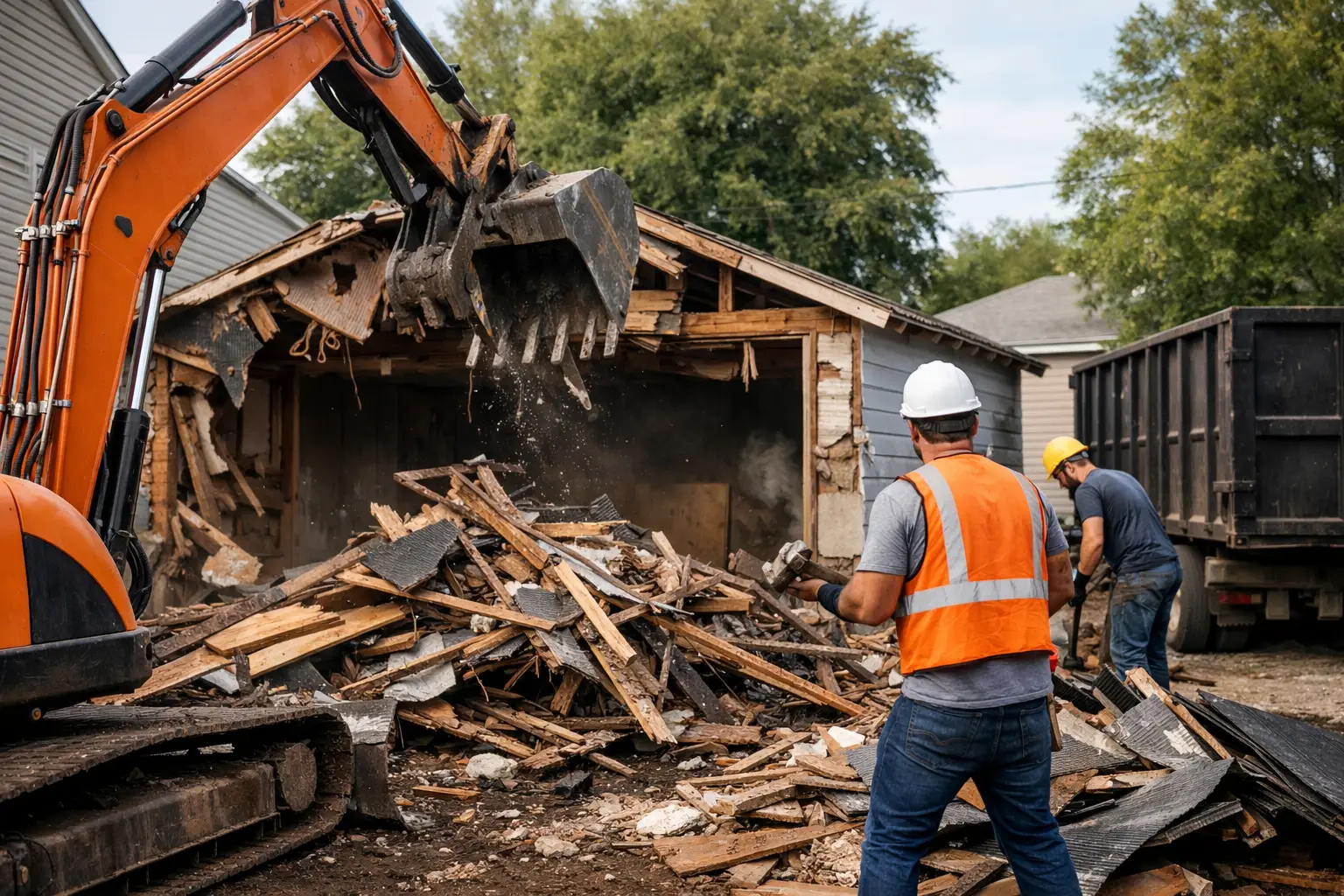
Traditional demolition is usually the fastest option for a structure that is unsafe, heavily deteriorated, or built from materials with limited reuse value. A crew uses the appropriate equipment to bring down the building, sort manageable materials where possible, and haul away the debris.
Deconstruction is more selective. Materials are removed in stages to preserve reusable lumber, doors, fixtures, metal, and other components. It can be a good fit for a garage with quality salvageable materials or for owners who want to prioritize donation and recycling. It often takes longer, so it may cost more in labor even when it reduces landfill waste.
Local Loop Junk Troop can assess the garage, its contents, access, and your plans for the space to help determine the most practical path. The goal is a clean, orderly removal process with upfront pricing, not a vague estimate that grows once the project is underway.
Plan for the Space After the Garage Is Gone
Before scheduling demolition, think one step beyond removal. Will the cleared area become a garden, parking area, patio, addition, new garage, or simply open yard space? Your answer affects whether you should keep the slab, remove footings, grade the site, or preserve nearby features.
A garage demolition project feels much simpler when the scope is clear from the start. Walk the property with the estimator, point out utilities and access concerns, separate what you want to keep, and ask for a quote that covers the complete job. That preparation helps turn an old, unwanted garage into usable space without adding unnecessary stress to your schedule.