A treadmill that no longer works is not just clutter. It is a heavy, awkward machine with a moving belt, motor, wiring, and often a steep flight of stairs between it and the curb. So, can haulers remove exercise equipment? In most cases, yes. A full-service junk removal crew can handle the lifting, loading, transportation, and disposal planning for many types of home and commercial fitness equipment.
The details matter, though. The type of machine, its condition, its location, and whether it needs to be disconnected or taken apart can affect the removal plan and price. Knowing what to expect helps you schedule confidently and avoid a stressful attempt to move it yourself.
Can Haulers Remove Exercise Equipment From Your Home?
Professional haulers commonly remove treadmills, elliptical machines, stationary bikes, rowing machines, weight benches, free weights, squat racks, cable machines, exercise mats, and smaller workout accessories. They can also often take larger home-gym setups, provided the equipment can be safely accessed and removed.
Most customers call for help after replacing an old machine, clearing a garage gym, preparing for a move, or reclaiming a spare bedroom. Property managers and landlords may need equipment removed after a tenant move-out. Offices, apartment communities, hotels, and fitness studios may need several machines cleared at once during a renovation or equipment upgrade.
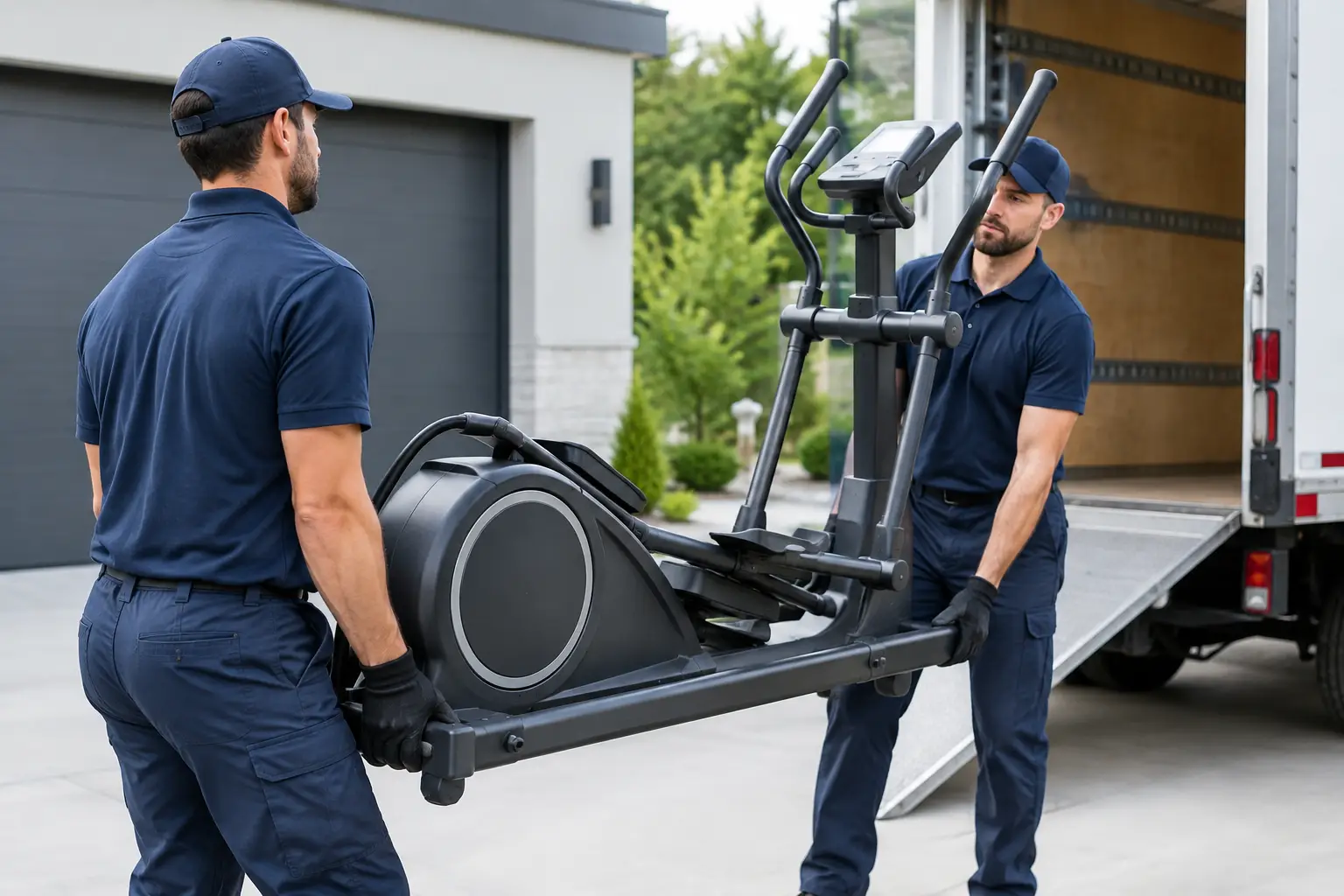
The advantage of a full-service crew is straightforward: you do not have to recruit friends, rent a truck, find a disposal site, or risk hurting your back trying to guide a 250-pound treadmill down the stairs. The crew assesses the item on site, protects the route as needed, loads it, and clears it from the property.
What Types of Fitness Equipment Can Be Hauled?
Many exercise items are routine junk removal jobs. Lighter equipment such as dumbbells, yoga mats, resistance bands, small benches, and compact bikes is usually simple to load. The larger, more complex pieces require more planning but are still well within the scope of an experienced hauling team.
Common items include:
- Treadmills and folding treadmills
- Ellipticals, stair climbers, and stationary bikes
- Rowing machines and ski trainers
- Weight benches, dumbbells, barbells, and plate sets
- Power racks, squat racks, and cable machines
- Multi-station home gyms and commercial gym equipment
A piece of equipment does not need to be working for it to be removed. In fact, broken machines are a frequent reason to call a hauler. A failed motor, cracked frame, worn belt, or outdated console can make repair impractical, especially when the machine has already been sitting unused for months.
The Biggest Factors That Affect Removal
Not every exercise machine is handled the same way. A folding treadmill on a ground-floor patio is very different from a commercial cable station in a finished basement. When requesting a quote, share as much useful information as possible, including photos, approximate dimensions, the floor level, and any tight turns or staircases.
Weight and Size
Exercise equipment is deceptively heavy. A basic treadmill may weigh 150 to 250 pounds, while premium models and commercial units can weigh far more. Weight plates, dumbbells, and multi-gym frames add up quickly. A crew may need extra labor, moving equipment, or a specific loading approach to keep the job safe.
Access to the Item
Stairs, narrow halls, elevators, sharp corners, low ceilings, and gravel paths can change the removal process. This does not mean the item cannot be removed. It means the crew needs an accurate picture before arriving so it can plan for sufficient labor and time.
If equipment was assembled in a basement or upstairs room, partial disassembly may be necessary. A professional team can often handle basic breakdown as part of the removal process, but highly specialized equipment or permanently mounted components should be discussed in advance.
Disconnection and Attached Components
Most home fitness equipment plugs into a standard wall outlet and can be unplugged before pickup. If a machine is hardwired, connected to a dedicated electrical setup, or attached to the wall or floor, arrange for the appropriate professional to disconnect it first unless the hauling company confirms it can perform that work.
The same applies to equipment installed near mirrors, flooring, built-in shelving, or wall-mounted televisions. Removal should protect the surrounding space, not create a new repair project.
How to Prepare Exercise Equipment for Hauling
You do not need to do the heavy lifting. A little preparation makes the appointment faster, safer, and more efficient.
First, remove personal items from cup holders, storage compartments, and nearby shelves. Unplug machines that are safely connected to a standard outlet. If you have the power cord, safety key, removable tablet, or loose accessories, decide whether they should go with the machine or be kept.
Next, clear a path from the equipment to the exit. Move small furniture, rugs, pet gates, boxes, and décor that could create a tripping hazard. Let the crew know about stairs, gates, parking restrictions, or any areas where pets should be secured.
Finally, do not start dismantling a heavy machine unless you know exactly what you are doing. Removing the wrong bolt can make a treadmill unstable or create loose, hard-to-carry pieces. It is usually better to leave the equipment intact and let the removal team assess the safest method when they arrive.
Where Does Old Exercise Equipment Go?
Responsible disposal depends on the condition and materials of the equipment. Usable stationary bikes, benches, or basic weight sets may have donation potential when they are clean, complete, and in working order. Not every organization accepts bulky fitness equipment, and acceptance can depend on current demand, condition, and available space.
Machines beyond repair may be evaluated for recycling opportunities. Treadmills and ellipticals can contain steel frames, aluminum parts, electronics, wiring, plastic, and rubber. Separating materials is not always simple, particularly for equipment with motors and digital consoles, but a responsible hauling company looks for practical recycling or donation options before sending everything to a landfill.
This is one reason full-service hauling is often preferable to leaving equipment at the curb. Curb rules vary, and bulky exercise machines may not be accepted by regular collection services. Improperly abandoned equipment can lead to fines, blocked sidewalks, or a frustrated HOA or property manager.
When a Specialty Plan May Be Needed
Some projects require more than a standard pickup. Commercial gym cleanouts, for example, can involve multiple treadmills, heavy rubber flooring, large racks, lockers, mirrors, and equipment anchored to concrete. A phased removal plan may be needed to keep a business operating safely during the transition.
Home projects can also become more involved when a machine is in a basement, a garage is packed with other belongings, or a home gym is being removed as part of a renovation. In those situations, a company that also handles cleanouts and light demolition can coordinate more of the work without making you schedule several different crews.
For Charlotte-area homeowners and businesses, Local Loop Junk Troop can assess the equipment, access route, and volume on site, then provide clear pricing before work begins. That upfront approach is especially helpful when a single machine turns into a full garage, office, or fitness-room cleanout.
What to Ask Before Scheduling Pickup
A quick conversation before booking can prevent surprises. Ask whether the company removes your specific type of equipment, whether basic disassembly is included, and whether there are added considerations for stairs or unusually heavy pieces. If you have several items, mention everything at once so the crew and truck size can be planned correctly.
It is also reasonable to ask how pricing is determined. Junk removal pricing is commonly based on the amount of truck space used, labor requirements, item weight, and access conditions. An on-site quote gives you the clearest answer because the team can see the machine and the route out of the property.
Old exercise equipment should not hold your space hostage because it is too heavy, broken, or inconvenient to move. With a prepared access path and a professional hauling team, that unused treadmill or full home-gym setup can be out of the way without turning your weekend into a moving project.