A renovation can create a surprising amount of debris before the new finishes are even installed. Old cabinets, drywall, lumber, concrete, cardboard, fixtures, and packaging can fill a driveway or jobsite quickly. Construction material recycling gives much of that material a better destination than a mixed landfill load, but it works best when cleanup is planned before the demolition begins.
For homeowners, contractors, landlords, and property managers, the goal is usually straightforward: clear the space fast, keep the property orderly, and dispose of debris responsibly without spending days making separate trips. The practical question is not whether every item can be recycled. It is which materials can be recovered, what needs to stay separated, and when a full-service hauling crew can make the process easier.
What construction material recycling actually involves
Construction material recycling is the recovery and processing of debris from building, remodeling, demolition, and repair work. Instead of treating every removed item as trash, recyclable materials are sorted and delivered to the appropriate recycling facility, transfer station, reuse outlet, or metal processor.
That distinction matters because a renovation pile is rarely one material. A kitchen tear-out may include wood cabinets, steel appliances, copper plumbing, laminate countertops, drywall, glass, wiring, cardboard, and general trash. Some of it has a strong recycling market. Some may be reusable if removed carefully. Other materials may require landfill disposal because they are damaged, contaminated, or not accepted locally.
Recycling is not always the same as donation or reuse. A working appliance may be donated when accepted by an organization. Clean lumber may be repurposed. Scrap metal may be processed into raw material for future manufacturing. Each route keeps usable resources in circulation, but each has different handling requirements.
Materials that are often recyclable
Acceptance rules vary by facility and by the condition of the load, but several common jobsite materials are frequently recoverable.
- Metal: Steel framing, rebar, copper pipe, aluminum siding, wiring, metal doors, gutters, and many appliances often have recycling value. Copper and aluminum should be kept separate when possible.
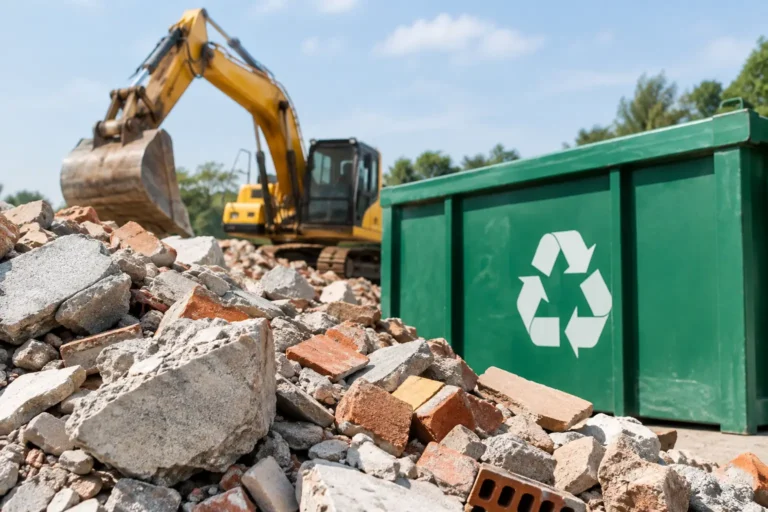
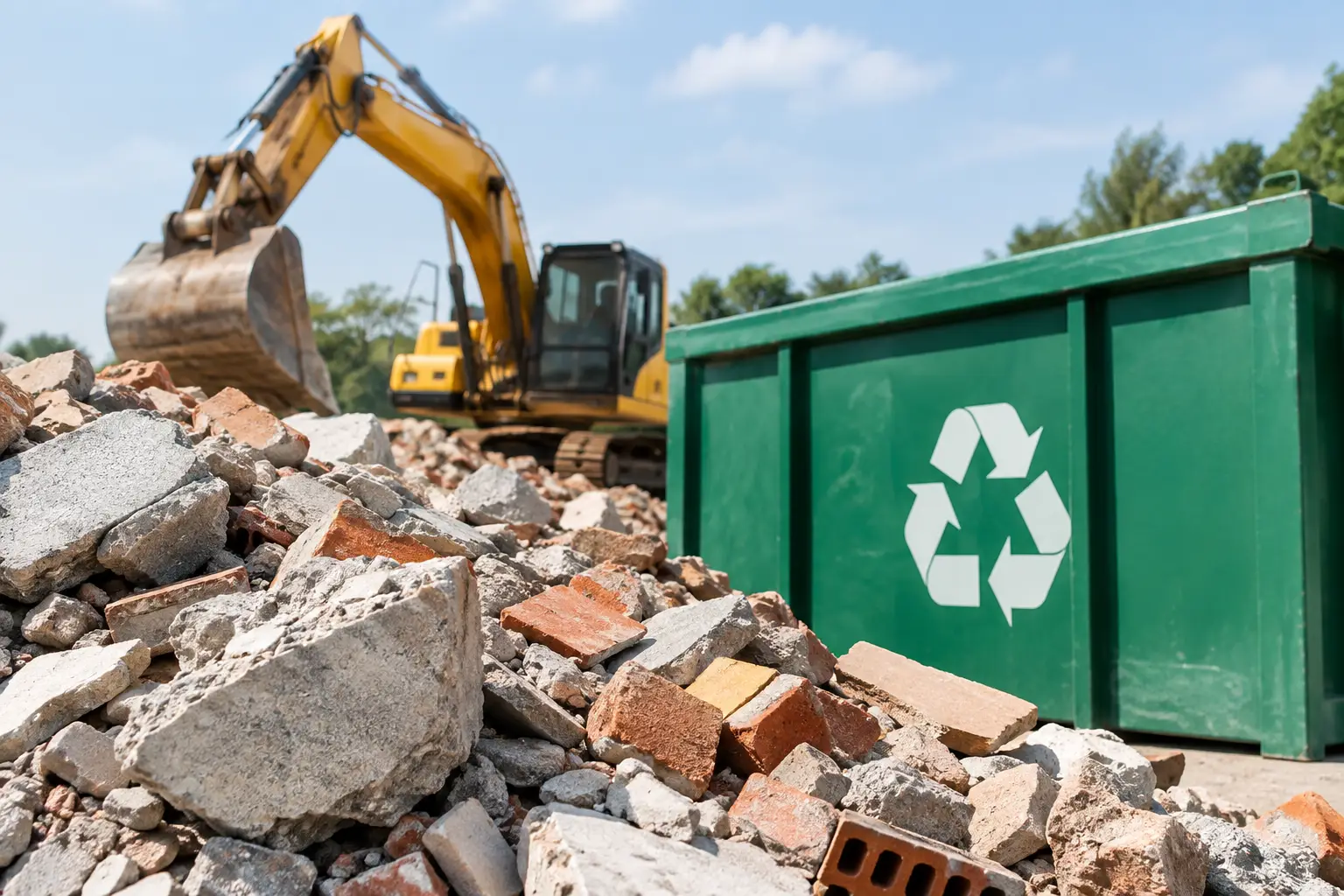
- Concrete, brick, and block: Clean masonry debris can often be crushed for aggregate or other construction uses. Soil, wood, plastic, and trash mixed into the pile can limit recycling options.
- Wood: Untreated lumber, pallets, and certain wood scraps may be processed into mulch, biomass material, or other products. Painted, pressure-treated, glued, or heavily contaminated wood may need a different disposal route.
- Cardboard and packaging: Appliance boxes, clean corrugated cardboard, and some clean plastic packaging are easy to overlook during a remodel. Breaking boxes down and keeping them dry makes recovery more practical.
- Asphalt shingles and roofing metal: Some facilities accept asphalt shingles for processing, while metal roofing is commonly recyclable. Roofing nails, underlayment, and mixed debris can complicate sorting.
Drywall deserves extra care. Clean drywall scraps may be accepted at specialized facilities, but wet material, joint compound, insulation, screws, and demolition debris can make it unsuitable. The same is true for glass, plastics, carpet, and insulation: local acceptance and material condition determine the best option.
Why sorting before hauling saves time and money
The easiest place to lose recycling opportunities is inside a mixed debris pile. Once food waste, household trash, wet insulation, paint, or broken glass are mixed with recyclable materials, sorting becomes slower, less safe, and sometimes impossible.
A little jobsite organization goes a long way. Set aside a designated area for metal, clean cardboard, and masonry debris as work progresses. If cabinets, doors, light fixtures, or appliances are in usable condition, remove them carefully rather than breaking them apart during demolition. This gives them the best chance of reuse or donation when a suitable outlet is available.
Sorting also affects hauling efficiency. Dense materials such as concrete and brick are heavy enough to reach a truck’s weight limit long before the truck looks full. Keeping those materials separate helps a hauling team load safely and direct them to the right facility. A pile of light renovation debris may be handled differently from a load of shingles, dirt, or broken block.
There is a trade-off. Creating separate piles takes a little time and space, which may not be realistic on a tight residential lot or during a fast-moving commercial renovation. In that case, it still helps to pull out the most valuable or easily recyclable materials, especially metal, cardboard, and intact reusable items. A professional crew can then assess the load and determine the most responsible practical disposal plan.
Reuse comes before recycling when possible
Recycling turns materials into feedstock. Reuse preserves the item itself, which often requires less processing. A solid wood door, working refrigerator, usable cabinet set, or lightly used office furniture may have more value intact than broken down for material recovery.
That does not mean every old item should be saved. Damaged cabinets with water swelling, unsafe electrical fixtures, cracked toilets, and worn-out carpet are rarely good candidates for donation. Condition matters, as does the time required to remove, clean, store, and transport an item. The best approach is realistic: protect what is clearly reusable, recycle what can be processed, and dispose of the remaining debris correctly.
For property managers preparing a unit for turnover, this can be especially helpful. Pulling usable appliances, doors, shelving, and fixtures before demolition may reduce waste while making the final cleanout more organized. For homeowners preparing for a remodel, it can prevent a perfectly usable item from being buried under broken drywall and general trash.
Plan for special materials before demolition starts
Some materials should never be handled as ordinary construction debris. Paint, solvents, batteries, fluorescent bulbs, pesticides, propane tanks, and certain electronics may require separate handling. Older buildings can also contain materials that need professional assessment before removal, including asbestos-containing materials, lead-based paint hazards, or mold-damaged components.
If you suspect a hazardous material, pause before tearing it out or loading it into a debris pile. Recycling facilities and junk hauling crews have rules designed to protect workers, customers, and the environment. Trying to hide prohibited materials in a mixed load can create delays, added fees, or unsafe conditions.
Appliances are another common example. Refrigerators, freezers, air conditioners, and dehumidifiers may contain refrigerants that need proper recovery before the unit is recycled. A full-service removal team can help identify what requires special handling so the cleanup does not become a disposal problem later.
When full-service debris removal makes sense
A small do-it-yourself project may only produce a few boxes and a manageable pile of lumber. Larger cleanouts and renovation projects are different. Once you are dealing with heavy materials, multiple waste streams, stairs, limited parking, or a deadline for a sale or inspection, hauling logistics can take over the project.
Full-service construction debris removal is useful when you want a crew to do the lifting, loading, hauling, and disposal coordination. It is also a practical choice for landlords, real estate professionals, and business owners who need a property cleared without asking their own staff to handle sharp, heavy, or dirty materials.
Before scheduling, share the type of debris involved. Mention concrete, shingles, appliances, lumber, cabinets, drywall, or any unusually heavy items. Clear details help the team arrive prepared, provide a more accurate on-site quote, and plan a safe loading process. If you have already separated metal or reusable items, point that out as well.
In Charlotte and nearby communities, renovation debris often has to be cleared from tight driveways, apartment communities, occupied offices, and active retail spaces. A respectful crew protects access areas, works efficiently, and leaves the pickup area swept up rather than adding another task to your day.
A cleaner jobsite starts with a simple decision
You do not need to turn every remodel into a complex waste-management project to make better disposal choices. Start by separating obvious recyclables, protecting reusable items, and identifying anything that needs special handling. Then choose a removal option that matches the size, weight, and urgency of the job.
When the debris is more than you can safely move or sort, Local Loop Junk Troop can provide the labor and hauling support to clear it out with upfront pricing and a responsible disposal-first mindset. The sooner the debris has a plan, the sooner your property can look like progress instead of a pile of leftovers.