
A worn-out sectional on the curb can become a neighborhood eyesore fast. An old refrigerator in the garage, a broken playset in the backyard, or a pile of renovation debris can be even harder to deal with because getting it out of the house is only half the job. The top bulky items junk haulers take are usually the items that will not fit in a standard trash cart, will not fit in your vehicle, or require more lifting than one person should handle alone.
For homeowners, renters, landlords, and business owners, full-service removal means a crew handles the heavy lifting, loading, transportation, and responsible disposal. Still, every item has different disposal needs. Knowing what can be picked up, what may require advance notice, and what cannot go in a junk truck helps you schedule confidently and avoid delays.
Top bulky items junk haulers take most often
Most large household and commercial items can be removed in one appointment when they are accessible and safe to handle. The final price generally depends on how much space the items take up in the truck, the labor involved, and whether an item needs special handling.
Furniture that has outlived its space
Furniture is one of the most common reasons people call a junk hauling company. Sofas, sectionals, recliners, loveseats, dining tables, dressers, bed frames, desks, bookcases, entertainment centers, and chairs can be difficult to move through tight hallways or down staircases. A professional crew can remove them from the room where they sit, so you do not have to drag heavy pieces across floors or risk damaging a doorway.
Mattresses and box springs also belong in this category. They are awkward, difficult to transport, and often not accepted with regular curbside trash. If the mattress is dry and reasonably clean, ask whether it can be directed to a recycling option. If it is heavily soiled, damaged by pests, or wet, disposal options may be more limited.
For donation, condition matters. A sturdy dining set or usable dresser may have a second life, while broken particleboard furniture usually needs to be recycled or disposed of. Local Loop Junk Troop prioritizes donation and recycling whenever practical, but no company can promise that every item will qualify.
Large appliances and old electronics
Appliance replacement often leaves one major problem behind: the old unit. Junk haulers commonly remove refrigerators, freezers, washers, dryers, dishwashers, ovens, ranges, microwaves, water heaters, and dehumidifiers. These items are heavy, and some contain components that require a proper disposal process.
Refrigerators and freezers deserve special attention because refrigerants must be handled correctly. Empty the appliance, unplug it in advance when possible, and let the crew know what type of unit you have when scheduling. A built-in appliance may require disconnecting from plumbing, gas, or electrical service before removal.
Televisions, computers, printers, monitors, and other electronics are also frequent pickup items. Electronics should not automatically go to a landfill because they can contain materials that need dedicated recycling. Tell the hauler about large TVs, server equipment, or a high volume of office electronics so the crew can plan truck space and handling time.
Outdoor equipment, yard waste, and oversized backyard items
The backyard can collect bulky items for years: an unused grill, rusted patio furniture, a collapsed trampoline, an old swing set, or a damaged storage bench. Most of these can be hauled away, especially when they are already broken down or easy to access through a gate.
Common outdoor pickup items include:
- Patio sets, umbrellas, grills, and fire pits
- Lawn mowers, wheelbarrows, garden tools, and bagged yard debris
- Trampolines, playsets, basketball goals, and above-ground pool materials
- Hot tubs, sheds, fencing, and deck materials after proper preparation
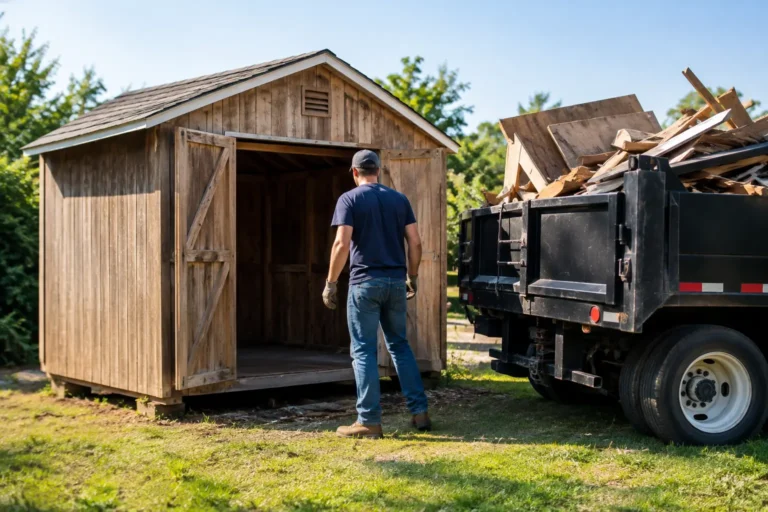
Some outdoor removals are more than a simple pickup. A hot tub may need to be drained and disconnected. A shed, playset, or large trampoline may need dismantling before it can be loaded. That is where light demolition or deconstruction services can save time. Instead of trying to take apart a weathered structure with household tools, you can have a crew assess the job, break it down safely, and haul the materials away.
Yard debris is typically straightforward when it is separated from household trash. Branches, brush, leaves, storm debris, and small logs are easier to load when piled in one accessible area. Heavy soil, concrete, and railroad ties may be accepted, but they can affect pricing because of weight and disposal restrictions.
Renovation debris and old fixtures
A bathroom refresh can create more debris than expected. Cabinets, vanities, countertops, toilets, sinks, drywall, flooring, tile, doors, and old fixtures can all be removed after a renovation or during a cleanout. The same applies to kitchen cabinets, carpet, lumber, trim, and demolition debris from a garage or interior project.
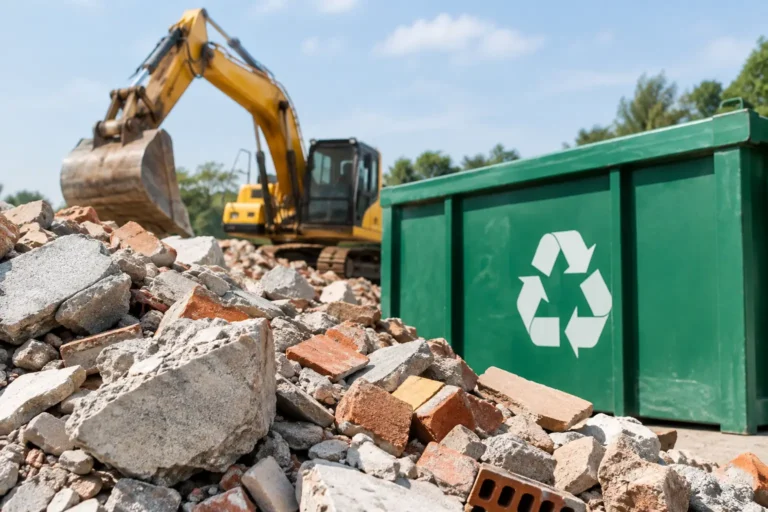
There is a trade-off with construction materials: bulky but lightweight debris such as cardboard, drywall, or insulation uses truck space quickly, while concrete, brick, tile, and dirt add significant weight. Sharing photos or an accurate description before the appointment helps the hauler provide a clearer estimate and arrive prepared.
If an item is still attached to the home, such as cabinets, a deck, or a bathroom vanity, confirm whether removal includes demolition. Hauling begins after the material is loose and ready to load unless you have arranged for demolition work as part of the service.
Commercial cleanout items
Businesses and property managers often need bulky removal on a deadline. Office desks, cubicles, conference tables, filing cabinets, shelving, retail displays, restaurant furniture, warehouse debris, and tenant-left belongings are all common commercial pickup items.
For office cleanouts, identify anything that contains sensitive records before the crew arrives. Remove documents, hard drives, keys, access cards, and personal belongings from desks and filing cabinets. For apartment turnovers, eviction cleanouts, or foreclosures, make sure the property is legally ready for items to be removed. Fast hauling helps clear the space, but it should happen only after the owner or manager has authority to dispose of the contents.
Bulky items that need special handling or may not be accepted
Junk removal is not the same as hazardous waste disposal. A reputable crew will explain restrictions before loading, rather than taking an item that could create a safety or environmental issue. These items often need a specialty program, a transfer station, or advance coordination:
- Paint, solvents, gasoline, propane cylinders, pesticides, and other hazardous chemicals
- Asbestos-containing materials, medical waste, and unknown chemicals
- Ammunition, firearms, explosives, and fireworks
- Large amounts of loose dirt, concrete, brick, or roofing material
- Vehicles, boats, RVs, and equipment with fluids or title requirements
Propane tanks, batteries, tires, and certain e-waste items may be accepted in some situations but can carry added disposal fees. Ask before scheduling rather than leaving them in a pile for the crew to discover. The same goes for pianos, safes, hot tubs, and oversized commercial equipment. They are often removable, but weight, access, stairs, and disassembly needs affect the plan.
Make your bulky-item pickup faster and easier
You do not need to move heavy items to the curb for full-service junk removal. In fact, leaving everything where it is can be safer when a crew is coming inside to remove it. What helps most is creating a clear path to the item, securing pets, and pointing out anything that stays.
Before the appointment, take personal items out of drawers, closets, and appliances. Empty refrigerators and freezers. If a piece is connected to water, gas, or electricity, have it professionally disconnected unless removal service specifically includes that work. Let the crew know about stairs, elevators, narrow gates, low-clearance driveways, or unusually heavy items before they arrive.
An on-site quote is useful because it accounts for the real conditions of the job, not just the item list. You can approve the upfront price before work begins, then let the team handle the loading and cleanup. Whether you are clearing a garage in Charlotte, turning over a rental, or making room for new furniture, the easiest next step is to separate what stays from what goes and have a professional take it from there.