A worn-out deck, damaged shed, or dated kitchen can make a property feel stuck. Before work begins, homeowners and property managers often face the same question: how do deconstruction vs demolition costs compare, and is saving materials worth the added effort? The short answer is that demolition is usually faster and less expensive upfront, while deconstruction can create value through material recovery, reduced waste, and a cleaner separation of reusable items.
The right choice depends on what is being removed, the condition of the materials, access to the site, your schedule, and whether salvaged items have a realistic destination. A clear on-site assessment is the best way to avoid paying for a method that does not match the job.
What You Are Paying For
Demolition means breaking down a structure or interior area quickly so the debris can be loaded, hauled, and properly disposed of. For a small deck, old cabinets, a bathroom tear-out, or a damaged shed, the crew focuses on safe removal, efficient loading, and leaving the work area clear for the next phase.
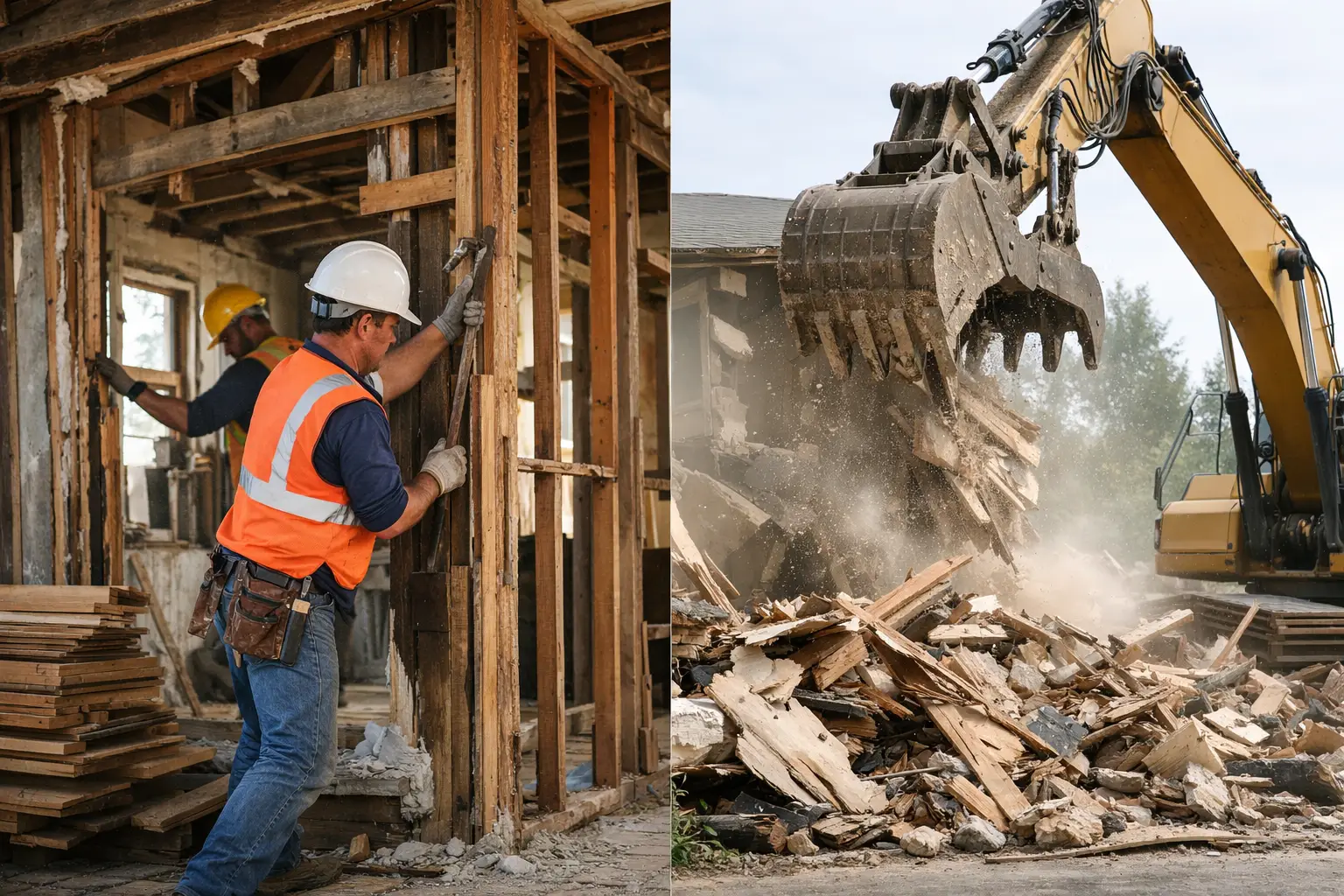
Deconstruction is more selective. Instead of tearing materials out in the fastest possible order, the crew removes components carefully to preserve lumber, doors, cabinets, fixtures, metal, brick, or other materials that may be reused, donated, recycled, or sold. This process often includes sorting materials into separate piles and pulling nails or fasteners from reusable wood.
That difference in labor is the main reason deconstruction often costs more at the start. A wall can be demolished in minutes. Removing trim, doors, cabinets, framing lumber, and fixtures without damaging them takes more hands-on time.
Deconstruction vs Demolition Costs at a Glance
For most projects, demolition has the lower initial price because it requires fewer labor hours. The crew can use the most efficient removal methods, consolidate mixed debris, and load it into a truck or dumpster without preserving every usable component.
Deconstruction may cost more because labor is more detailed. Materials must be removed in sequence, handled carefully, sorted, and sometimes staged for pickup or donation. If a structure has layers of old repairs, hidden fasteners, water damage, or tight access, that careful work can take substantially longer than expected.
However, the cheapest upfront option is not always the lowest total-cost option. Deconstruction may offset part of its added labor cost when it reduces disposal volume, captures valuable recyclable metal, or preserves quality materials that can be reused. In some cases, keeping usable cabinets or doors out of the landfill also supports a renovation budget if those items can be repurposed elsewhere.
The key word is “may.” Salvage value is not guaranteed. A pile of old lumber only has value if it is in usable condition and someone can accept, transport, or use it. Do not assume every removed item creates a tax deduction, resale profit, or donation opportunity.
The Cost Factors That Matter Most
Project size affects both options, but material condition often matters more than people expect. A simple, dry, well-built deck with accessible framing can be a good deconstruction candidate. A deck with rotted boards, insect damage, multiple coats of paint, or rusted hardware may be better suited for demolition and responsible disposal.
Access is another major factor. A backyard behind a narrow gate, a steep lot, a condo with limited loading access, or an interior project several flights from the nearest exit all require more labor. Whether the debris can be loaded directly into a truck or must be carried long distances can affect the quote as much as the removal method.
The material itself also changes the equation. Metal, appliances, concrete, clean wood, and cardboard may have different recycling or disposal paths. A mixed load of drywall, insulation, treated lumber, old flooring, and broken fixtures usually requires more handling. Hazardous materials are a separate issue altogether and should not be handled as ordinary demolition debris.
Permits, utility disconnections, and structural safety requirements can add costs as well. Removing a freestanding shed is different from removing part of a load-bearing wall, plumbing fixtures, or an attached deck. For interior demolition, the work must protect areas that are staying, including floors, adjacent walls, electrical systems, and plumbing lines.
When Demolition Is Usually the Better Value
Demolition is often the practical choice when speed matters most. Landlords preparing a unit for turnover, homeowners facing a tight renovation schedule, and property managers clearing storm-damaged structures may need the space ready quickly. In these cases, the labor savings from a fast teardown can outweigh potential salvage value.
It is also usually the better fit when materials are beyond reuse. Moldy cabinets, water-damaged drywall, heavily rotted lumber, shattered tile, and unstable structures should not be preserved just because they can technically be removed piece by piece. Safe removal and proper disposal come first.
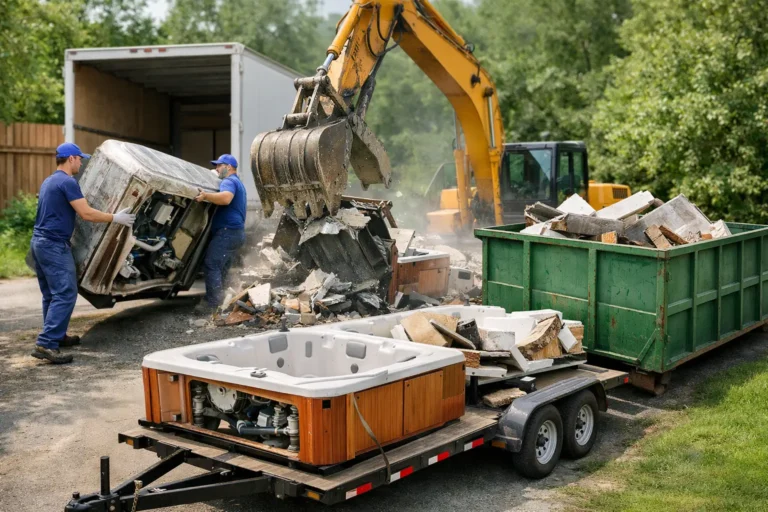
For many small projects, such as a worn-out playset, damaged fence sections, an old hot tub surround, or a basic bathroom tear-out, full deconstruction may add complexity without producing enough reusable material to justify it. A professional crew can still recycle appropriate materials during a demolition job without turning the entire project into a salvage operation.
When Deconstruction Can Be Worth the Extra Labor
Deconstruction makes the most sense when a structure contains quality materials in good condition and there is a practical plan for them. Solid wood doors, usable cabinets, architectural trim, clean framing lumber, brick, and certain fixtures may be worth saving when they can be reused or accepted for donation.
It can also be a strong choice for customers who place a high value on waste reduction. If keeping materials out of the landfill is a priority, selective removal gives more items a chance to be recycled or donated. This approach can be especially meaningful during a large remodel, estate cleanout, or commercial space refresh where usable furniture, equipment, and building materials are being removed together.
Timing still matters. Deconstruction should be scheduled before the renovation crew needs the space, not squeezed into the last possible day. Giving the project enough room on the calendar prevents the careful removal process from becoming an expensive delay.
Ask for a Quote That Separates the Options
A useful quote should do more than provide one final number. Ask whether the price includes labor, loading, hauling, disposal fees, recycling, and cleanup. If you are considering deconstruction, ask what materials are realistically salvageable and how they will be handled.
It also helps to request separate options when the project allows it: a standard demolition price, a selective deconstruction price, and a hybrid approach. The hybrid option is often the most sensible. A crew can carefully remove high-value or reusable materials first, then demolish and haul away the remaining structure efficiently.
For example, a kitchen project may involve saving solid cabinets and recyclable appliances while removing damaged countertops, drywall, flooring, and old fixtures as demolition debris. A deck project may involve recycling metal rails and preserving a few usable boards while quickly removing unsafe framing. This approach keeps the work practical instead of treating every item as equally worth saving.
Do Not Overlook Disposal and Cleanup
The teardown is only part of the cost. Debris has to be loaded, transported, sorted where appropriate, and taken to the correct disposal, recycling, or donation destination. Large, bulky materials can fill a truck quickly, and dense materials such as concrete, dirt, or roofing can change hauling requirements.
A full-service removal team saves customers from arranging a dumpster, doing the heavy lifting, and making multiple disposal trips. That convenience matters when a property needs to be cleared for contractors, listing photos, new tenants, or a move. It also helps keep the work area orderly, which is safer for everyone still working on the property.
In Charlotte and nearby communities, Local Loop Junk Troop can assess the material, access, and removal goals before recommending a straightforward path. The goal is not to push deconstruction or demolition in every situation. It is to remove what needs to go safely, provide upfront pricing, and divert usable materials through recycling or donation whenever that is a practical option.
The best decision is the one that respects your timeline, your budget, and the condition of the materials. Save what has a real next use, remove what does not, and make sure the final price accounts for the whole job – not just the first swing of the hammer.