That old refrigerator in the garage is not just taking up space. It is heavy, awkward, and in some cases expensive to dispose of the wrong way. This appliance removal and recycling guide is built for homeowners, landlords, property managers, and business owners who need a clear plan for getting rid of unwanted appliances without damaging property, wasting time, or sending recyclable material straight to the landfill.
Large appliance pickup sounds simple until you are standing in front of a dead washer with no dolly, a narrow hallway, and no idea whether your local trash service will take it. Some items also contain refrigerants, oils, metal components, wiring, and electronics that need proper handling. That is where a full-service removal approach saves time and avoids problems.
What counts as an appliance for removal?
In most cleanouts, appliance removal includes refrigerators, freezers, washers, dryers, dishwashers, ovens, stoves, microwaves, water heaters, air conditioners, dehumidifiers, and ice makers. In commercial spaces, it can also mean restaurant coolers, prep units, vending machines, and breakroom appliances.
The removal method depends on the item. A basic microwave is not the same job as a side-by-side refrigerator on a second floor. Weight, access, disconnect requirements, and recycling rules all affect the process and the final cost.
Why appliance recycling matters
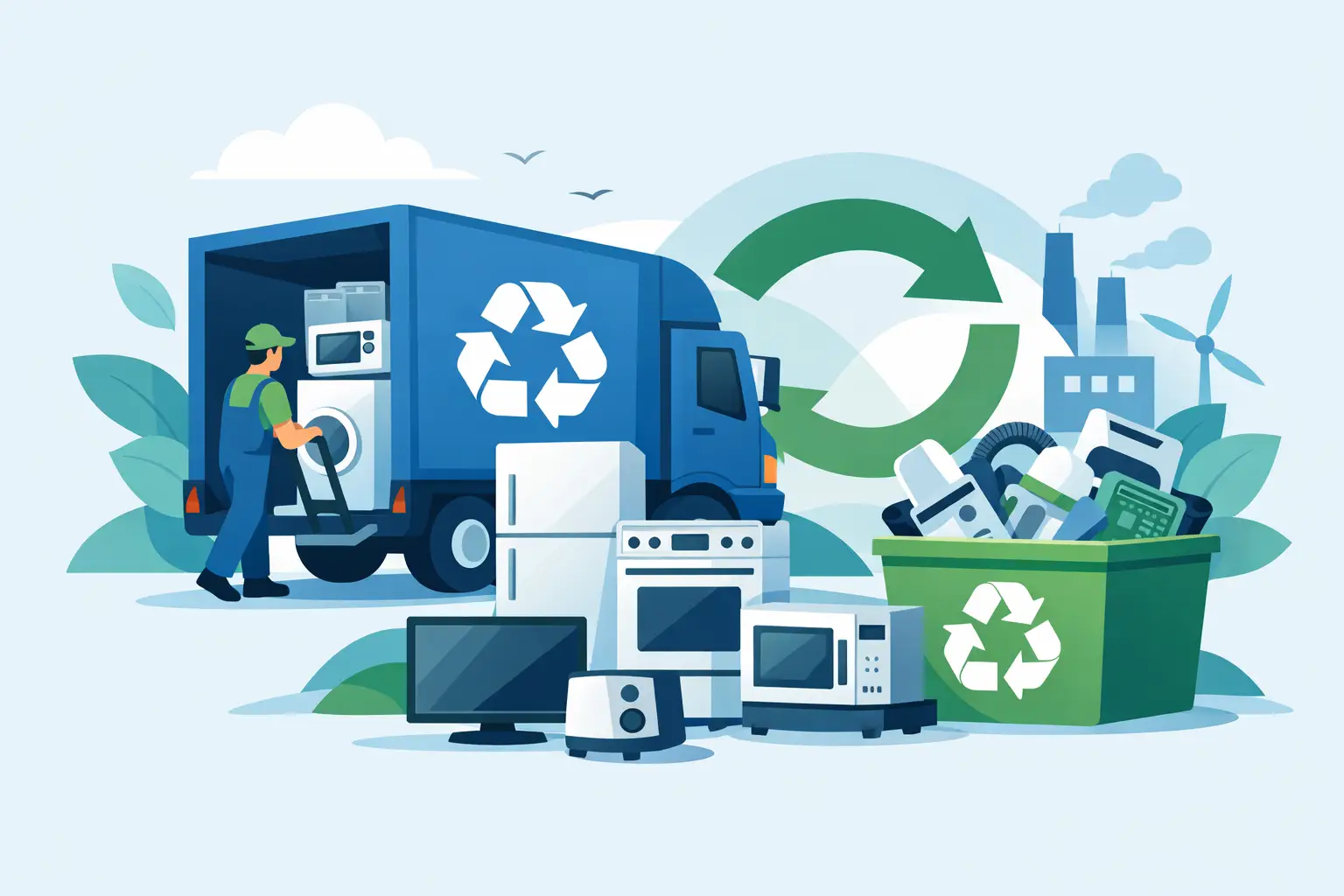
Old appliances are full of materials that still have value. Steel, aluminum, copper, and certain plastics can often be separated and recycled. Some units can also be partially salvaged for parts when they are no longer worth repairing.
Just as important, some appliances need extra care because they contain materials that should not end up in a landfill. Refrigerators, freezers, air conditioners, and some dehumidifiers may contain refrigerants. If those are handled carelessly, you are not just dealing with a bulky item problem. You are dealing with an environmental and compliance issue.
For customers who care about responsible disposal, recycling is not a bonus. It is part of choosing a company that treats the job professionally from pickup to final drop-off.
Appliance removal and recycling guide: what to do before pickup
A smooth removal starts before the crew arrives. A few simple steps make the job faster, safer, and more predictable.
If the appliance is still connected, disconnect utilities in advance unless you have confirmed that disconnection is part of the service. That can include unplugging electric units, shutting off water lines to washers or refrigerators, and making sure gas appliances are disconnected by a qualified professional when needed. Gas is one area where DIY shortcuts are not worth the risk.
Next, empty the appliance completely. Food, water, detergent, and loose parts add weight and create a mess during transport. Shelves, drawers, and trays should either be secured inside or removed and carried separately if they are likely to shift.
It also helps to clear the path from the appliance to the exit. Move rugs, décor, small furniture, and anything breakable. Measure tight doorways if access looks questionable. A few inches can be the difference between a quick haul-out and a scratched wall.
For refrigerators and freezers, defrosting ahead of time is a smart move. You do not want meltwater dripping through the house or into a truck bed. If the unit has been sitting unused for a while, be prepared for odors, mold, or pest issues. Mentioning that upfront helps the removal team come ready.
When curbside pickup is enough and when it is not
Some cities or waste services will take appliances at the curb, but it depends on the item and the local rules. You may need a special bulk pickup appointment. Some providers only accept certain appliances, and many will not handle units with refrigerants unless they are processed first.
Curbside can work if the appliance is already outside, easy to move, and accepted by your waste program. It is usually less practical when the item is upstairs, built in, water damaged, or part of a larger cleanout.
That is where full-service hauling makes more sense. Instead of figuring out manpower, transportation, disposal rules, and site cleanup yourself, the crew handles the lift, load, haul, and recycling process. For busy property managers, families handling an estate, or landlords turning over a unit, that convenience matters.
What affects appliance removal cost?
Pricing is rarely one-size-fits-all because the job itself is not one-size-fits-all. A basic pickup from a garage is a different level of work than removing multiple appliances from a tight basement or a third-floor apartment.
The biggest cost factors are item size, weight, number of appliances, access conditions, and whether special handling is required. Refrigerant-bearing appliances may involve different processing. Built-in units can take longer to remove. If the appliance is surrounded by debris or part of a larger cleanout, labor needs increase.
This is why on-site quotes are useful. They allow the team to see stairs, hallways, disconnection status, and loading conditions before giving a final price. For customers, that means fewer surprises and a clearer expectation of what the service includes.
Common mistakes people make with old appliances
The most common mistake is underestimating the weight and bulk of the item. Appliances are difficult to grip, hard to balance, and easy to drop. That puts floors, door frames, and backs at risk.
Another mistake is assuming every appliance can be left at the curb or dropped at any landfill. Recycling requirements vary, especially for cooling equipment. The wrong disposal method can mean wasted trips, rejected loads, or extra fees.
People also forget the cleanup around the removal. Once an old appliance is moved, you may find rust stains, water damage, pests, dust buildup, or flooring issues underneath. In kitchens, laundry rooms, garages, and rental units, it helps to plan for a quick sweep-up and inspection after the item is gone.
Residential and commercial needs are not always the same
In a home, appliance pickup is often tied to replacement, downsizing, moving, or a garage cleanout. Speed is usually the top priority because the new unit is arriving soon or the old one is in the way.
For landlords, real estate professionals, and property managers, the pressure is different. The goal is usually turnover speed, reliable scheduling, and keeping the property presentable. A missed pickup can delay cleaning crews, installers, and showings.
Commercial jobs can be more complex. Access may be limited to certain hours. Appliances may be larger or part of a broader office, retail, or restaurant cleanout. In those cases, it helps to work with a team that can handle both appliance hauling and the rest of the junk removal in one trip.
Choosing the right appliance removal company
A dependable company should make the process easier, not more confusing. Look for straightforward scheduling, clear communication, upfront pricing, and a labor-inclusive service model. If you have to guess what happens to the appliance after pickup, that is not a good sign.
It also helps to ask practical questions. Will they remove the appliance from inside the home or building? Do they handle heavy lifting and loading? Can they take more than one item during the same appointment? Do they prioritize recycling and donation when possible?
For Charlotte-area customers dealing with a time-sensitive cleanout, Local Loop Junk Troop fits best when the job needs to happen quickly, the lifting needs to be handled professionally, and responsible disposal still matters.
A better way to think about old appliance disposal
An appliance is not just junk because it stopped working. It is a large, heavy item made of materials that need the right exit plan. Sometimes the best option is simple recycling. Sometimes it is part of a larger cleanout that needs labor, hauling, and fast scheduling. And sometimes the real value is not in the metal at all. It is in getting your garage, rental, office, or kitchen back in working order without spending your weekend wrestling a dead fridge down the stairs.
If you are planning appliance pickup, the easiest job is the one that is handled safely, priced clearly, and finished without leaving a mess behind.