That old shed usually stops being useful long before it stops taking up space. Once the roof starts leaking, the floor softens, or the doors stop closing, shed demolition and removal becomes less of a someday project and more of a safety and cleanup issue.
For many property owners, the real problem is not the structure itself. It is everything attached to it – rotted wood, rusted metal, old shelving, forgotten chemicals, broken tools, and a patch of yard that is hard to reclaim. If you want the space back without spending your weekend cutting panels apart, loading debris, and figuring out where it can legally go, a full-service removal approach makes the most sense.
When shed demolition and removal makes sense
Some sheds are obvious tear-down candidates. They lean, leak, or have visible rot around the base. Others look mostly fine from a distance but have structural issues underneath, especially if the floor framing has been sitting on damp ground for years.
A damaged shed is not the only reason to remove one. Many homeowners want to open up yard space for a patio, garden, play area, parking pad, or fence project. Landlords and property managers often need a shed gone before listing, leasing, or turning over a property. Real estate professionals may also need a fast solution when an aging outbuilding hurts curb appeal.
There are also practical situations where repair simply does not make financial sense. If a shed has widespread water damage, termite activity, roof failure, or a cracked base, the labor and material cost to save it can exceed the value of replacing it. In those cases, removal is usually the cleaner and more cost-effective decision.
What affects the scope of shed demolition and removal
Not every shed comes apart the same way. Size matters, of course, but access is often just as important. A small shed in an open backyard can be removed much faster than a medium shed tucked behind a fence with narrow gate access.
Material makes a difference too. Wood sheds may require careful breakdown if framing has become unstable. Metal sheds can have sharp edges and fasteners that slow down handling. Plastic or resin sheds are often lighter, but they still need to be dismantled and hauled properly. If the shed sits on skids, pavers, a wood platform, or a concrete slab, that foundation may or may not be included depending on the job.
Contents also change the scope. Many old sheds are partially full, and that adds sorting, loading, and disposal time. Yard equipment, scrap wood, paint cans, old chemicals, and bulky storage items may require separate handling. If you are pricing the job, it helps to know whether the shed is empty, lightly filled, or packed wall to wall.
Safety is a bigger issue than most people expect
A shed can look simple, but demolition has real risks. Roof panels can shift unexpectedly. Rotten floors can collapse underfoot. Rusted nails, broken glass, wasp nests, exposed wiring, and mold are all common in older structures.
That is why a professional crew usually starts with assessment, not brute force. The structure needs to be checked for stability, access points, and hazards before teardown begins. If there is electrical service running to the shed, that should be addressed before demolition starts. The same goes for any plumbing or attached utility lines.
This is also where experience saves time. A trained crew knows how to dismantle sections in an orderly way, protect nearby fences or landscaping, and keep debris contained instead of scattering materials across the yard.
How the process usually works
The best shed demolition and removal jobs are straightforward from the start. First comes an on-site look at the shed, the access route, and any added debris or contents. That is how accurate pricing happens. Guesswork over the phone only goes so far when a structure may have hidden damage or disposal complications.
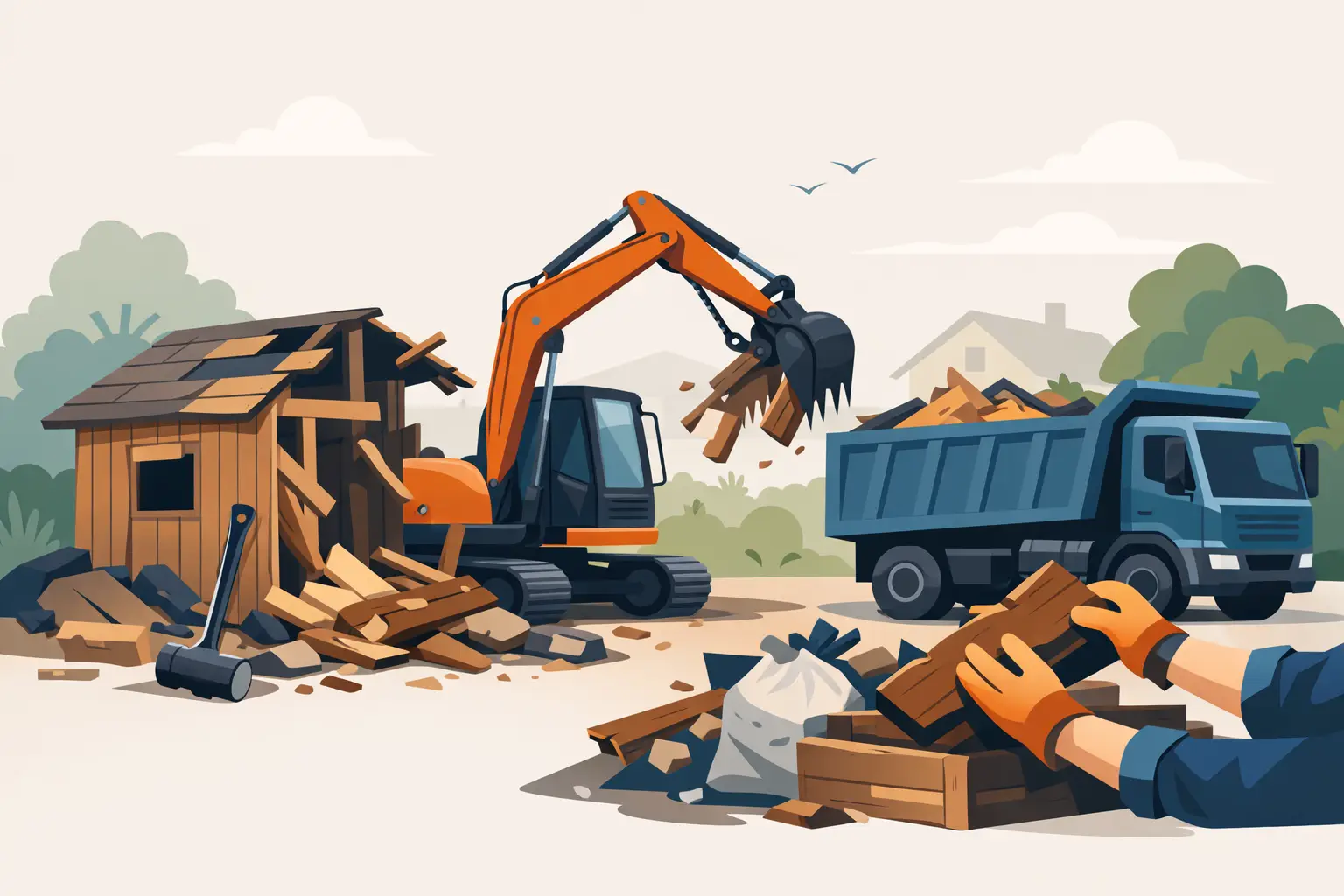
Once approved, the team clears out remaining contents if needed, breaks the shed down safely, loads the debris, and hauls it away. Nails, loose lumber, roofing pieces, and scattered material should be picked up as part of the cleanup, not left behind for the customer to manage.
Some jobs are completed in a single visit. Others take longer if the structure is oversized, heavily deteriorated, or built on a more involved base. In either case, customers usually want the same thing – a clean area, no surprise charges, and no pile of leftover debris at the curb.
Cost depends on more than shed size
People often ask for a ballpark price based on dimensions alone, but that only tells part of the story. A basic 8-by-10 shed with easy access and no contents is a very different project from a 10-by-16 shed packed with junk and surrounded by tight fencing.
Pricing typically reflects labor, hauling volume, weight, disposal fees, material type, and site conditions. If the shed contains extra debris, if the wood is heavily waterlogged, or if the crew has to hand-carry everything a long distance to the truck, the cost will be higher than a simple tear-down.
Foundations are another variable. Removing a small prefab shed is one thing. Breaking up and hauling concrete, blocks, or anchored framing is another. That does not mean the project is difficult to schedule, only that accurate quotes need to account for the full scope.
Upfront pricing matters here. Customers should know what is included before work begins, especially when they are balancing a move, a renovation, or a property deadline.
Do you need a permit?
It depends on the shed and the local rules. In some areas, removing a small detached structure may not require a permit. In others, size, electrical connections, and property conditions can trigger permit requirements or utility coordination.
That is one reason local experience matters. A company that handles this work regularly in the Charlotte area is more likely to spot issues early and let you know when additional steps may be needed. It is always better to ask before demolition starts than to deal with delays after the fact.
What happens to the debris
Disposal should be part of the plan, not an afterthought. A torn-down shed can generate more waste than most people expect, especially when you include roofing, framing, shelving, flooring, fasteners, and old contents.
Responsible disposal means separating materials when possible and keeping usable items out of the landfill if they can be recycled or otherwise handled appropriately. Not every piece of a shed can be recovered, but a service-minded crew should still approach cleanup with that mindset.
That is especially relevant for customers who care about keeping projects clean and responsible. If you are clearing a property for resale, managing a rental turnover, or just trying to improve the yard without adding more stress, proper hauling and disposal is part of the value.
Why full-service removal beats DIY for most customers
DIY shed removal can look manageable until the work actually starts. Then you are dealing with demolition tools, lifting, truck loading, disposal site rules, and several rounds of cleanup. If the structure is unstable or the weather turns, the project can drag out fast.
For homeowners, the biggest benefit of hiring help is convenience. For landlords, HOAs, and property managers, it is speed and reliability. For seniors and families handling transitions, it is not having to coordinate labor, hauling, and disposal separately.
A professional team also helps avoid the half-finished project problem. Too many shed tear-downs end with a debris pile sitting in the yard because the structure came down faster than the disposal plan came together. Full-service work keeps the project moving from demolition through final haul-away.
In Charlotte and nearby areas, Local Loop Junk Troop handles this kind of work with the same approach customers want across every removal job – clear scheduling, upfront pricing, labor included, and a clean finish that respects the property.
Preparing for your shed removal appointment
You do not need to do much, but a little prep helps the job move faster. If you want to keep anything from inside the shed, pull it out ahead of time and set it aside. Make sure pets stay indoors or away from the work area, and clear any vehicles or obstacles that could block access.
If you are not sure whether the foundation, contents, or nearby debris should be included, mention it during the quote. The more complete the picture, the more accurate the pricing and timeline will be.
An old shed does not usually fail all at once. It slowly becomes a source of wasted space, cleanup headaches, and one more project hanging over the property. Getting it removed is often the fastest way to make the yard usable again and move on with the next plan.